Aert Medical Aert Medical

China Best Point of Care MRI Trends for Buyers?

Time:2026-11-23 Author:Oliver
0%

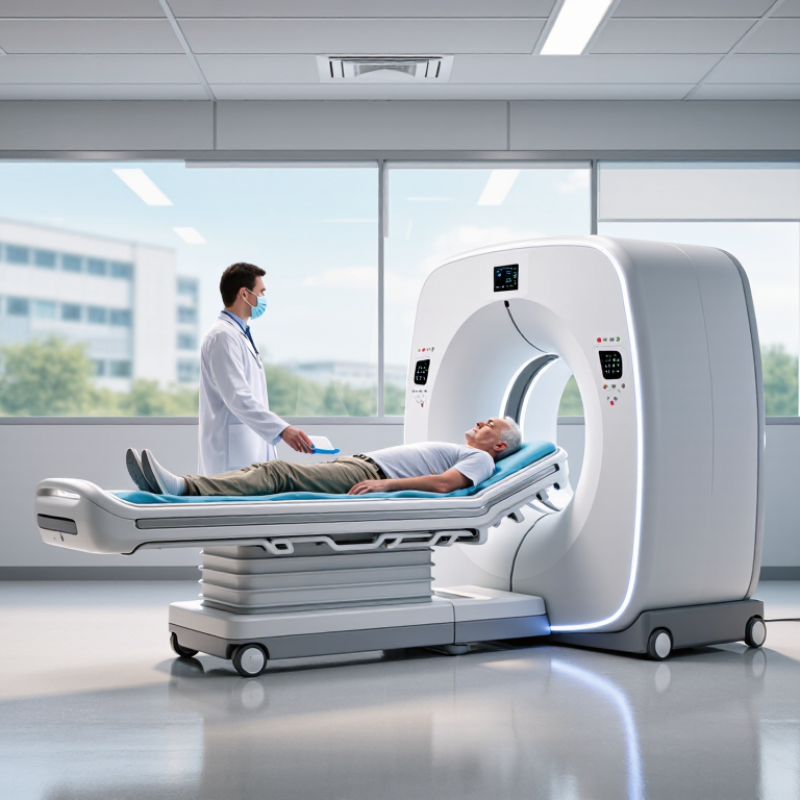
Point-of-care MRI is moving from a specialist imaging suite toward selected bedside settings. For buyers in China, the opportunity is practical: assess patients without moving them through crowded corridors. But compact size alone does not prove clinical value. What are the latest trends in point-of-care magnetic resonance? The answer increasingly involves low-field systems, portable designs, focused neurological applications, and workflow integration.

The U.S. FDA’s 2021 510(k) decision summary for Hyperfine’s Swoop system describes a portable MRI operating at 0.064 tesla. This is a useful technical reference, not proof that every bedside use is appropriate. The American College of Radiology’s Manual on MR Safety also reminds purchasers to examine screening, access control, staff training, and the room environment. Small scanner. Real safety work. Buyers should compare image quality for intended examinations, scan time, uptime, software support, and the availability of trained staff.

China-focused purchasing also requires careful verification of current NMPA registration, local service coverage, installation requirements, and total operating costs. Vendor brochures may emphasize portability, yet omit repeat-scan rates or realistic throughput. Ask for evidence from peer-reviewed studies and hospital evaluations, then check whether those results match the buyer’s patient population. Market reports can help describe adoption and investment, but estimates vary by scope and methodology. That uncertainty deserves attention. A thoughtful assessment should weigh measurable clinical performance alongside workflow gains, rather than treating low-field MRI as a universal replacement for conventional scanners.
China Best Point of Care MRI Trends for Buyers?

Understanding Point-of-Care MRI in China

Understanding Point-of-Care MRI in China

Point-of-care MRI brings imaging closer to the bedside or clinic, rather than relying only on a centralized radiology department. In China, that idea meets a large, varied care system. The National Health Commission’s 2023 Statistical Bulletin reported about 9.55 billion medical visits nationwide. That figure counts visits, not MRI scans, but it highlights why workflow and access matter. A compact scanner may help in selected settings, especially where patient transfer is difficult.

It is not a universal substitute for full-service MRI.

Buyers should assess the intended examination, image quality, scan time, patient positioning, and staff training. Ask for clinical evidence tied to the exact use case, not just headline field-strength figures. Check room dimensions, power and cooling needs, shielding requirements, and how images connect with existing hospital systems.

These details can decide whether installation runs smoothly. They matter.

A smaller footprint does not guarantee faster care; room turnover or limited protocols may erase the gain. Request realistic throughput data, service-response commitments, and reader feedback from comparable clinical environments. Also confirm how patients are screened for MRI risks and who oversees image interpretation.

China’s hospital capacity and workflows differ widely, so local site assessment is essential. A careful pilot can expose practical limits before a large purchase.

Emerging Technologies and Market Trends

Point-of-care MRI is moving closer to emergency departments, outpatient clinics, and smaller hospitals. The appeal is practical: a compact scanner may reduce patient transfers and bring imaging nearer to clinical decisions. Newer low-field designs can require less space and simpler site preparation than traditional systems. Yet compact does not mean effortless. Buyers still need to check room dimensions, power requirements, patient access, and staff training before comparing equipment.

Software is changing the picture, too. Image reconstruction tools can help make scans clearer from lower-field data, while streamlined protocols may shorten exams. Some systems also support remote workflow assistance. Useful, but not magic. Buyers should ask to see representative images and timed workflows, not just polished demonstrations. A few minutes saved on paper may disappear when staff reposition a patient or repeat a sequence.

Market interest is growing, though adoption will vary by specialty and patient mix. Emergency teams may value rapid access, while musculoskeletal clinics may prioritize repeatable positioning and image consistency. Ask how the system handles motion, larger patients, and routine quality checks. Also examine service response times and the cost of ongoing support. A small footprint can be attractive; it can also distract from less visible operational needs. The evidence is still developing, so cautious evaluation remains sensible. Some details are easy to miss.

Clinical Uses and Care Settings

China Best Point of Care MRI Trends for Buyers?
Clinical Uses and Care Settings

Point-of-care MRI is most relevant when moving a patient is risky, slow, or disruptive. In intensive care, bedside brain scans can help clinicians assess suspected injury, bleeding, or changes in ventricular size. In emergency departments, portable imaging may support early neurological assessment, while pediatric teams may value reduced transfers and less separation from caregivers. It is a workflow tool, not a universal substitute for full-field MRI.

A 2021 JAMA Neurology study evaluated bedside, low-field MRI in 50 critically ill patients. Researchers reported diagnostic-quality images in 80% of participants, demonstrating potential in selected cases. That is encouraging, but not definitive. Buyers should ask which sequences are available, how long scans take, and whether images answer their local clinical questions. Small lesions and subtle findings may remain difficult to assess.

Care settings shape the purchasing decision. An ICU needs equipment that fits around beds, monitors, and staff movement. An outpatient clinic may prioritize throughput, room layout, and patient screening procedures. The American College of Radiology’s MR safety guidance underscores the need for rigorous screening and controlled access, even when systems are designed for bedside use. Low-field images can also be less detailed. That trade-off deserves honest review. A useful evaluation includes radiologist review of sample cases, staff training, and clear escalation pathways when conventional imaging is needed.

How to read this chart: A value of 1 marks an example of a point-of-care brain MRI application reported for that setting; 0 means it is not shown in this illustrative mapping. These markers do not represent prevalence, market share, or exclusive indications. Point-of-care MRI evidence is concentrated in brain imaging, including bedside assessment when moving a patient to a conventional scanner is difficult.

How Buyers Can Evaluate MRI Systems

For buyers comparing point-of-care MRI systems in China, start with the clinical task, not the brochure. Can the system answer the questions clinicians actually face, such as detecting major brain injury at the bedside? A 2021 JAMA Neurology study assessed bedside, low-field MRI in 50 critically ill patients. It showed that bedside scanning was feasible, but it did not establish equivalence to conventional MRI. That distinction matters. Ask for evidence tied to your patient group, scan protocol, and intended use. Review image quality with local radiologists, including difficult cases, not just polished sample images.

Then test the workflow in the room where the system will operate. Measure doorway clearance, turning space, patient transfer time, and setup time between scans. Check which sequences are available, how long each takes, and whether images fit existing review systems. The ACR Manual on MR Safety offers a useful framework for reviewing staff training, screening, and site-specific safety procedures. Request service-response targets, uptime records, and full lifecycle costs, including coils, software, and training. Small details matter. A system that fits beside a bed may still disrupt ward routines. I would also question whether “portable” alone improves access; without trained staff and dependable service, it may not.

Supplier, Regulatory, and Service Considerations

For buyers assessing point-of-care MRI suppliers in China, compare more than image quality and purchase price. Request technical specifications, sample images, installation requirements, and written warranty terms. Check whether the supplier can explain expected scan times, patient positioning, and the system’s intended clinical use. Ask for references from facilities with similar workloads. A polished demonstration is not enough.

Regulatory documentation should match the specific model and intended use. Confirm applicable registration, labeling, and import requirements with the relevant local authority or a qualified regulatory professional. Requirements can differ by market and may change. Ask who handles documentation updates and provides records for audits. One easy mistake is treating a supplier’s verbal assurance as proof. Get key claims in writing.

Tips: Before signing, clarify service response times, parts availability, software updates, staff training, and escalation contacts. Ask what happens if a critical component fails on a busy clinic day. Request a preventive-maintenance schedule and a clear breakdown of service costs. Check that room planning covers power, access, and patient flow. Small details matter. Buyers may still overlook something; revisit the checklist with clinical, technical, and procurement staff before committing.

China Best Point of Care MRI Trends for Buyers? - Supplier, Regulatory, and Service Considerations

Buyer Dimension Market Trend or Practical Consideration What Buyers Should Verify Procurement Implication
System portability and siting Point-of-care MRI is intended to bring imaging closer to patients, but system size, weight, room layout, and installation needs vary by design. “Portable” does not necessarily mean suitable for every bedside or room. Request the system’s dimensions, weight, access and floor-loading requirements, power specifications, installation plan, and documented site-planning limits. Assess the intended location before purchase. Confirm whether the unit can reach the required care areas and whether site preparation or dedicated space is needed.
Clinical use and image quality Lower-field and compact MRI systems may support selected imaging tasks, but image quality and diagnostic performance depend on the anatomy, protocol, patient, and clinical question. Review evidence for the specific intended use, representative images, acquisition protocols, reader workflow, and any limitations stated in the product labeling. Match the system to defined clinical pathways. Do not assume that performance is interchangeable with conventional high-field MRI for every indication.
Throughput and workflow Care-location imaging may reduce patient transport, while actual throughput depends on scan time, patient preparation, positioning, staffing, and cleaning procedures. Ask for task-specific scan times and workflow demonstrations, including setup, patient transfer or positioning, repeat scans, and room turnaround. Estimate capacity using the full examination workflow rather than scan time alone, and identify who will operate the system and support patient care.
MRI safety Compact or lower-field systems still require MRI-specific safety controls. Static magnetic fields can attract ferromagnetic objects, and patients and staff require appropriate screening. Confirm the system’s magnetic-field hazard information, safety-zone requirements, screening procedures, implant policies, emergency procedures, and staff training materials. Include MRI safety governance in site approval and operating procedures. Follow the system’s labeling and applicable local safety requirements.
Regulatory status in China Medical-device registration and market access in China are governed by the National Medical Products Administration (NMPA). Requirements depend on device classification, intended use, and applicable rules. Verify the exact model’s registration or filing status, certificate holder, approved intended use, labeling, and any conditions or limitations with the relevant official records. Confirm regulatory status for the precise configuration being purchased; do not rely solely on general product claims or approvals in other markets.
International regulatory evidence Regulatory authorization is jurisdiction-specific. In the United States, applicable FDA pathways can include 510(k), De Novo, or PMA; in the European Union, market access follows the EU Medical Device Regulation and relevant conformity-assessment requirements. For each target market, request the applicable authorization or conformity documentation and confirm that it covers the model, intended use, and software version offered. Treat overseas clearances or certificates as supporting information, not as substitutes for authorization required in the purchasing jurisdiction.
Standards and risk management Relevant safety and quality frameworks can include IEC 60601-1 for basic safety and essential performance, IEC 60601-1-2 for electromagnetic compatibility, and IEC 60601-2-33 for MRI equipment. Applicability depends on the device and jurisdiction. Request applicable test reports or certificates, the risk-management documentation, and evidence that standards cited are appropriate to the marketed configuration. Have clinical engineering and regulatory teams review the evidence alongside local requirements rather than treating a standards list as proof of overall suitability.
Supplier capability For a specialized imaging system, product support includes more than delivery: installation, user training, applications support, spare-parts access, and escalation pathways affect operational readiness. Assess the supplier’s local service coverage, qualified personnel, training plan, parts availability, escalation process, and references for comparable installations. Evaluate the supplier’s ability to support the intended location and workload, and document responsibilities for installation, training, and ongoing service.
Maintenance and uptime Service needs depend on system design and usage. Preventive maintenance, software support, calibration or quality checks, and repair response can affect availability. Review the proposed maintenance schedule, warranty scope, response and resolution commitments, remote-support conditions, software-update process, and exclusions. Compare service terms on a like-for-like basis and plan for downtime, loan equipment or alternative imaging pathways where clinically necessary.
Connectivity and cybersecurity Integration with hospital systems may involve DICOM image exchange, worklist connectivity, network access, and software updates. Connectivity and cybersecurity capabilities vary by configuration. Verify supported interfaces, network requirements, user-access controls, audit logging, update responsibilities, data handling, and the hospital’s cybersecurity review requirements. Involve IT and information-security teams before installation, and confirm that promised interfaces are included in the quoted configuration.
Total cost of ownership The purchase price is only one cost component. Installation, room preparation, training, service, consumables if applicable, software, and workflow changes may add to lifecycle cost. Request an itemized quotation and a multi-year cost view that identifies inclusions, recurring charges, service assumptions, and potential upgrade costs. Compare lifecycle costs against the expected clinical workload and operational benefits, not just the initial equipment price.
Acceptance and ongoing quality checks Performance should be evaluated against the intended clinical tasks and the supplier’s specifications, with a documented process for acceptance and routine quality assurance. Agree on installation acceptance criteria, image-quality checks, baseline records, operator competency requirements, and procedures for investigating performance changes. Set measurable acceptance criteria in the purchase contract and assign responsibility for ongoing quality assurance before clinical use.
Note: Regulatory pathways, applicable standards, and clinical requirements depend on the device configuration, intended use, and market. Buyers should verify current requirements with the relevant authorities and qualified clinical, regulatory, and MRI-safety professionals.

FAQS

What is point-of-care MRI?

It brings scanning closer to a bedside or clinic, rather than relying only on a central imaging department. Not every case.

How could bedside MRI help patients and staff?

It may reduce transfers for selected patients, especially when moving them is difficult. The scanner can sit nearer to clinical decisions.

Can a compact MRI replace a conventional system?

No. Its protocols and image quality may not suit every examination. It is not a universal substitute.

What should buyers check before installation?

Measure room dimensions, doorway clearance, and space for turning equipment. Confirm power, cooling, shielding, and patient access needs.

What clinical evidence should buyers request?

Ask for evidence matching the intended patients and scan protocols. A 2021 study involving 50 critically ill patients found bedside scanning feasible, but did not prove equivalence to conventional MRI.

Does a smaller scanner always make care faster?

No. Patient repositioning, repeated sequences, or room turnover can erase time savings. Ask for timed workflows from similar clinical settings.

What safety and staffing details matter?

Confirm patient screening procedures, staff training, and responsibility for image interpretation. A safety framework can help teams review local procedures.

How should buyers judge image quality and software?

Review representative images with local radiologists, including difficult cases. Reconstruction tools may help, but they are not magic.

What ongoing costs and service details should be reviewed?

Check service-response targets, uptime records, and lifecycle costs for coils, software, and training. I would not assume portability alone improves access; staffing may still be the bottleneck.

Conclusion

This article explores the evolving point-of-care MRI landscape in China, where advances in compact system design, imaging software, and workflow integration are making MRI more adaptable to different clinical environments. What are the latest trends in point-of-care magnetic resonance? Key developments include greater portability, more streamlined scanning processes, and efforts to make imaging accessible in settings beyond conventional radiology departments. Potential applications vary by clinical need and may include bedside assessment, emergency care, and imaging in smaller healthcare facilities.

For buyers, selecting a system involves balancing image quality, clinical requirements, space, installation needs, and total operating costs. It is also important to assess supplier experience, staff training, maintenance coverage, and the availability of technical support. Buyers should verify that systems and intended uses meet applicable regulatory and safety requirements in China, and evaluate how well a solution fits existing clinical workflows. These considerations can help organizations make informed purchasing decisions and plan for reliable long-term use.

Oliver

Oliver

Oliver is a seasoned marketing professional with a wealth of expertise in driving brand awareness and engagement. With a deep understanding of our company's product offerings, he consistently delivers high-quality content that enriches our professional blog. His insights not only shed light on......