Aert Medical Aert Medical

China Top 10 Open MRI Systems for Interventional Radiology?

Time:2026-10-14 Author:Sophia
0%

Interventional radiology is moving toward image guidance that is precise, repeatable, and safer for patients. The global MRI systems market was valued at approximately USD 7.3 billion in 2023, according to Grand View Research, with continued growth expected through 2030. That expansion includes systems designed for difficult examinations and procedure-focused workflows. Yet market growth does not automatically mean clinical suitability.

Why is an "open" design preferred for interventional radiology? The answer begins with access. A wider, more open structure can give clinicians clearer physical access to the patient during positioning, monitoring, and selected MRI-guided procedures. It may also reduce anxiety for patients who feel trapped inside a conventional tunnel. Dr. Scott B. Reeder, a radiologist and MRI researcher at the University of Wisconsin–Madison, has described MRI’s central advantage as “excellent soft-tissue contrast without ionizing radiation.” That contrast can help visualize vessels, tumors, and surrounding anatomy while limiting radiation exposure.

Small details matter. A clinician may need to reach an airway, adjust a needle, or observe a patient’s breathing pattern. The ACR Manual on MR Safety also reminds providers that access must never weaken screening, monitoring, or emergency planning. Open systems are not automatically better. Some provide lower magnetic-field strength, slower sequences, or less consistent image quality. That trade-off deserves honest attention.

This guide compares China’s top 10 open MRI systems for interventional radiology. It considers field strength, patient access, real-time imaging, coil design, MR-conditional accessories, service support, and total workflow value. The ranking remains practical, not absolute. Local expertise can change the result.
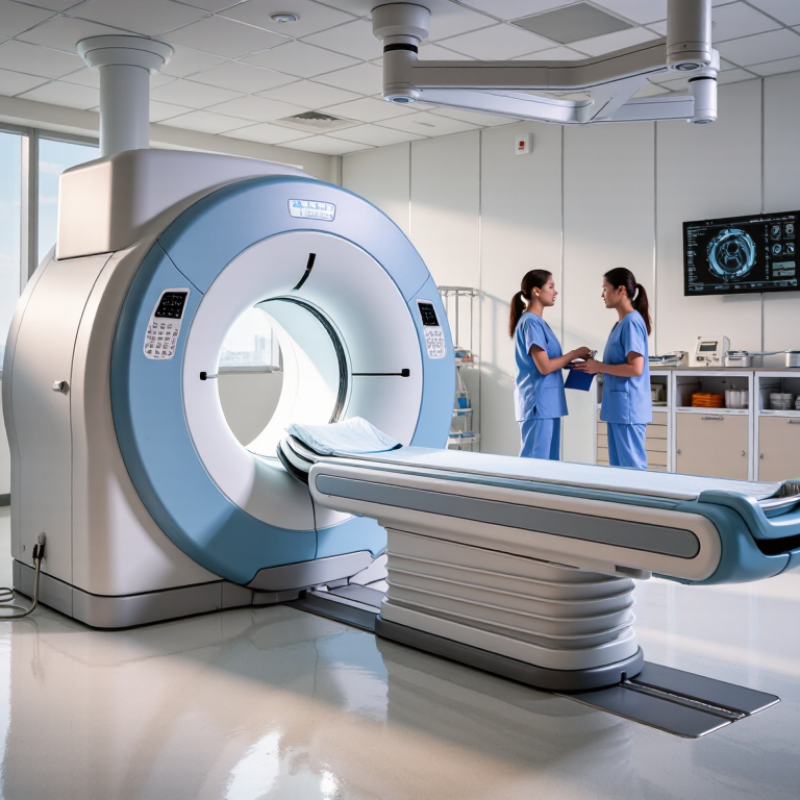
China Top 10 Open MRI Systems for Interventional Radiology?

Defining China’s Top 10 Open MRI Systems for Interventional Radiology

China Top 10 Open MRI Systems for Interventional Radiology

Defining China’s Top 10 Open MRI Systems for Interventional Radiology requires more than comparing images or prices. A credible ranking should examine clinical access, real-time guidance, field strength, gradient performance, and patient positioning. The best systems leave space around the magnet. That matters.

Interventional radiologists also need stable image updates during needle placement. The system should support compatible coils, sterile drapes, monitoring equipment, and clear communication with the patient. A practical evaluation includes table movement, gantry access, acoustic comfort, and software response time. Small delays can affect a delicate procedure. Vendor claims alone are insufficient. Hospitals should review peer-reviewed evidence, regulatory registration, installation records, and local service performance.

A strong top-ten assessment can score ten areas: open design, image quality, temporal resolution, access, workflow, safety, software, compatibility, training, and maintenance. Direct demonstrations are valuable. So are interviews with radiographers who use the equipment daily. Their comments often reveal issues hidden in brochures, such as awkward cable routing or difficult cleaning. No ranking is perfect. Public data may be incomplete, and hospital needs differ by procedure volume. A lower-field system may offer better access, while a stronger system may provide sharper anatomy. That trade-off deserves honest attention. The final selection should reflect documented clinical use, transparent testing, and dependable support across China.

Comparing 0.2–1.0T Field Strength and Open-Bore Access for Procedures

China’s top 10 open MRI systems for interventional radiology should be compared by access, workflow, and clinical reliability, not field strength alone. Systems from 0.2T to 1.0T offer different compromises. Lower-field units often provide wider open-bore access and reduced installation demands. Higher-field systems may deliver stronger signal and finer soft-tissue detail, but they can increase technical complexity and patient sensitivity.

Open-bore geometry matters during biopsies, drainage procedures, and needle-guided therapies. A broad vertical opening lets clinicians approach the patient from the side, while keeping monitoring equipment and sterile accessories accessible. In practice, table movement, coil design, and real-time sequence speed can matter more than a specification sheet. Small details matter. A clear line of sight can reduce repositioning and procedure time.

At 0.2–0.5T, image contrast may support basic guidance, though some lesions need longer acquisitions or repeated sequences. Around 0.7–1.0T, improved signal can help visualize smaller targets, yet artifacts and workflow demands require careful testing. Radiologists should assess image quality on representative cases, not showroom images. Safety screening, device compatibility, emergency access, and staff training remain essential. A ranking can look precise, but it rarely is. Local procedure volume and maintenance support may change the practical order.

Ranking Systems by Gradients, Real-Time Imaging, and 5–10 mm Spatial Resolution

China Top 10 Open MRI Systems for Interventional Radiology?

Ranking Systems by Gradients, Real-Time Imaging, and 5–10 mm Spatial Resolution

A useful Top 10 ranking should examine clinical performance, not appearance or marketing claims. For interventional radiology, gradient strength affects sequence speed, motion control, and image refresh rates. Stronger gradients can support sharper dynamic imaging, but hardware alone does not guarantee reliable guidance. Software, coil design, and workflow matter equally.

Real-time imaging is central during needle placement and drainage procedures. Systems should display anatomy with minimal delay and stable contrast during patient movement. A 5–10 mm spatial resolution range may suit broad targeting and instrument visualization. It may not adequately show tiny lesions or narrow vascular structures. Resolution also changes with field strength, sequence type, scan time, and patient anatomy. My ranking would therefore reward systems that maintain practical resolution during live procedures, not only during static testing.

Tips: Request measured refresh times, gradient specifications, and phantom images. Ask how resolution changes during motion. Review sample cases with experienced radiologists. A vendor-reported number can look precise, yet clinical handling may feel slower. That deserves careful questioning. Calibration, room access, and emergency support should also influence the final ranking. These details are easy to overlook, and I would not treat any single specification as decisive.

Assessing Workflow, MR Compatibility, and Interventional Safety Performance

China Top 10 Open MRI Systems for Interventional Radiology?

Assessing Workflow, MR Compatibility, and Interventional Safety Performance

Evaluating open MRI systems for interventional radiology requires more than comparing field strength. The best candidates should support stable access, clear imaging, and predictable staff movement. A wide patient opening can reduce awkward positioning during needle guidance. It may also improve communication with anxious patients.

Workflow begins before scanning. Teams should check table movement, coil placement, sterile draping, and emergency access. Real-time imaging must remain responsive during needle advancement. A few seconds of delay can matter. Dedicated monitors should remain visible without forcing the operator near the magnet. Room design matters too, especially when nurses and anesthetic staff share limited space.

MR compatibility needs careful, case-specific verification. Instruments, monitoring leads, infusion equipment, and biopsy accessories must carry appropriate safety classifications. “MR Conditional” does not mean universally safe. Conditions may include field strength, positioning, scanning duration, or equipment configuration. Staff also need reliable screening for implants and unknown metal objects. Safety performance should include acoustic protection, thermal monitoring, cable management, and controlled access to the scanning zone. Published specifications can be incomplete, so independent testing and documented clinical procedures remain essential. An impressive image may not compensate for poor emergency access. That is where some rankings become questionable.

China Top 10 Open MRI Systems for Interventional Radiology? - Assessing Workflow, MR Compatibility, and Interventional Safety Performance

Comparison basis: This table compares commonly used open-MRI system configurations rather than manufacturer-branded products. Ratings are configuration-level assessments based on field strength, patient access, real-time imaging capability, equipment compatibility, and procedural safety requirements. Final suitability must be confirmed against the actual scanner, accessories, local regulations, and institutional protocols.

Rank Open MRI Configuration Typical Field Strength Patient Access and Workflow MR Compatibility Considerations Image-Guided Intervention Suitability Interventional Safety Performance Main Limitations
1 High-field vertical open configuration 1.0–1.2 T Excellent side access and direct communication with the patient; suitable for procedures requiring repeated needle repositioning. Requires strict screening of instruments, monitoring equipment, anesthesia accessories, and implants because magnetic force and torque are higher than in low-field systems. Very high Very high Higher acoustic noise, radiofrequency heating considerations, and greater equipment restrictions.
2 Wide-gap vertical open configuration 0.7–1.0 T Provides broad lateral access, easier patient positioning, and good workflow for musculoskeletal, breast, and selected abdominal procedures. MR-conditional accessories must remain within the defined static-field and gradient exposure limits; cables should be routed to prevent loops and burns. High High Lower signal-to-noise ratio than conventional high-field systems and longer sequences for some examinations.
3 Open vertical system with real-time guidance package 0.5–0.8 T Supports interactive needle guidance with an unobstructed approach and rapid confirmation of needle trajectory. Procedure-specific coils, optical tracking components, and non-ferromagnetic needle guidance devices require validated MR-conditional status. High High Real-time image quality may be less detailed for very small lesions or deep targets.
4 Wide-access open MRI for pain and spine procedures 0.5–0.7 T Useful for prone or supine positioning and offers better access for spinal, joint, and selected pain-management interventions. Spinal and procedure coils should be positioned to preserve access while avoiding cable contact with the patient’s skin. High High Limited suitability for procedures requiring high temporal resolution or extensive whole-body coverage.
5 Side-access open system with dedicated intervention table 0.3–0.7 T A dedicated table can improve sterile-field organization, patient transfer, and repeat imaging during a procedure. The table, positioning aids, fixation devices, and emergency equipment must be specifically approved for the scanner environment. High Moderate–high Lower field strength can reduce lesion conspicuity and increase examination or intervention time.
6 Low-field open MRI with basic interactive imaging 0.2–0.5 T Offers very open access and relatively simple patient communication, especially for superficial or musculoskeletal procedures. Lower magnetic force may simplify equipment handling, but every accessory still requires formal MR safety classification. Moderate–high High Reduced signal-to-noise ratio, lower spatial resolution, and less reliable visualization of small or low-contrast targets.
7 Open MRI with passive needle-navigation guidance 0.3–0.8 T Navigation aids can shorten targeting steps and support planned trajectories for biopsies, aspirations, and injections. Navigation frames and needle guides must be non-ferromagnetic or specifically MR-conditional at the intended field strength. High Moderate–high Accuracy depends on registration quality, patient motion, image updating speed, and operator training.
8 Open MRI with anesthesia and physiologic monitoring support 0.3–1.0 T Designed for patients requiring sedation or anesthesia, with improved access for airway observation compared with narrow-bore systems. Ventilators, infusion pumps, oxygen delivery, pulse oximetry, ECG, and capnography must be MR-conditional and positioned according to site-specific rules. Moderate–high Very high Anesthesia workflow may require additional staff, emergency planning, access control, and equipment validation.
9 Open MRI for extremity and superficial soft-tissue intervention 0.2–0.7 T Open geometry facilitates direct access to joints, superficial masses, and peripheral soft tissues under local anesthesia. Small-field coils and local positioning devices must be secured to prevent motion and unintended contact with conductive materials. High High Not intended for most deep abdominal, thoracic, or complex whole-body interventions.
10 Compact low-field open MRI for selected outpatient procedures 0.2–0.5 T Can support lower-complexity image-guided procedures where open access and patient comfort are more important than maximum image detail. Equipment restrictions may be less demanding than at higher field strengths, but projectile, heating, induced-current, and implant risks remain. Moderate High Limited spatial resolution, slower workflow for complex targeting, and restricted application range.
Safety note: All MRI-guided interventions require controlled access to the magnet room, formal patient and implant screening, MR-conditional equipment, prevention of projectile incidents, prevention of radiofrequency burns, continuous communication with the patient, and a rehearsed emergency response pathway. “MR conditional” status is device- and configuration-specific and must be verified before every procedure.

Selecting the Best Ten Platforms by Clinical Utility, Service, and Cost Data

China Top 10 Open MRI Systems for Interventional Radiology?

Selecting the Best Ten Platforms by Clinical Utility, Service, and Cost Data

A credible China top-ten list should begin with clinical utility, not brochure language. Each open MRI system needs review against access around the patient, image clarity, procedure time, and needle guidance support. Wide openings matter during biopsy or pain intervention. Yet a wider design may reduce signal strength. That trade-off is easy to overlook.

Clinical teams should test representative cases, including spine, joints, and soft-tissue lesions. Radiologists, technologists, physicists, and procurement staff should score the same criteria. Useful evidence includes repeat-scan rates, positioning time, table stability, and compatibility with monitoring equipment. Service quality also needs measurable data. Check engineer response times, spare-part availability, application training, and annual uptime from hospital records.

Cost comparisons should include installation, room adaptation, coils, software, maintenance, staffing, and downtime. The lowest quotation may become expensive after two years. Local service coverage can matter more than a small purchase discount. A careful ranking should verify at least three hospital references for every platform. Some published performance claims remain difficult to compare fairly. That is a weakness in this review model. Still, transparent scoring is more dependable than an attractive specification sheet. Procurement teams should retain the original quotations and service reports before making a final selection.

China Top 10 Open MRI Systems for Interventional Radiology

Selecting the Best Ten Anonymous Platforms by Clinical Utility, Service Readiness, and Cost Efficiency

How to read the chart: Scores are normalized from 0 to 100 using clinically relevant open-MRI factors, including low-field image quality, patient access, interventional workflow suitability, gradient performance, technical support, uptime planning, installation complexity, and five-year ownership cost. Higher cost-efficiency scores indicate lower relative acquisition and lifecycle expense. The platforms are anonymized configuration profiles rather than manufacturer rankings.

Benchmark basis: commonly published open-MRI specifications and procurement ranges for systems approximately covering 0.3–0.5 T field strength, open patient access, hospital installation, and routine interventional imaging requirements. Final selection should be validated against local tenders, clinical protocols, service-level agreements, and regulatory requirements.

FAQS

What makes an open MRI system suitable for interventional radiology?

It should provide patient access, stable imaging, responsive guidance, and space for staff movement. The opening matters.

Why is field strength not the only selection factor?

Higher field strength may sharpen anatomy, while lower strength can improve access. The better choice depends on each procedure.

Which workflow details should hospitals test?

Teams should test table movement, coil placement, sterile draping, monitoring, and emergency access. Small delays can matter.

What does MR compatibility require?

Instruments and monitoring equipment need case-specific safety verification. “MR Conditional” does not mean safe in every setup.

How can hospitals evaluate image performance fairly?

They can test spine, joint, and soft-tissue cases using shared scoring criteria. Direct demonstrations reveal practical weaknesses.

What service data should procurement teams review?

Review engineer response times, spare-part access, training, uptime, and maintenance records. Service matters after installation.

What costs belong in a realistic comparison?

Include installation, room changes, coils, software, maintenance, staffing, and downtime. The cheapest quote may not stay cheap.

Are open MRI rankings always reliable?

No ranking is flawless. Public data may be incomplete, and hospital needs differ by procedure volume. Some claims remain difficult to compare.

Conclusion

This article presents a practical framework for identifying China’s top 10 open MRI systems for interventional radiology. It compares platforms across the 0.2–1.0T field-strength range, focusing on open-bore access, patient positioning, gradient performance, real-time imaging, and achievable spatial resolution of approximately 5–10 mm. The evaluation emphasizes how effectively each system supports image-guided procedures while maintaining clear visualization and efficient clinical operation.

Why is an "open" design preferred for interventional radiology? Open architecture can provide improved access to the patient, greater flexibility for instruments and staff, and better comfort for individuals who may feel confined in conventional systems. The ranking framework also considers workflow integration, MR compatibility, interventional safety, service support, maintenance requirements, total operating cost, and overall clinical utility. Rather than relying on specifications alone, the comparison highlights balanced performance, procedural practicality, and long-term value for hospitals seeking a safe and efficient open MRI solution.

Sophia

Sophia

Sophia is a dedicated marketing professional with an exceptional depth of knowledge about her company's products and services. With a keen understanding of market trends and customer needs, she crafts insightful blog posts that not only inform but also engage readers, enriching the company’s online......