Aert Medical Aert Medical

7 Best Ways to Maintain a Stable Magnetic Field on the Move?

Time:2026-11-16 Author:Charlotte
0%

A stable magnetic field is easy to take for granted on a fixed bench. On a moving cart, vehicle, or portable instrument, nearby motors, steel frames, cables, vibration, and changing orientation can all affect readings. Even a small disturbance may matter when a sensor needs repeatable measurements. The practical question is: How to maintain a stable magnetic field in a mobile environment?

The answer rarely depends on one accessory. This guide introduces seven useful methods: map magnetic interference, increase distance from noisy components, choose low-interference materials, secure and orient equipment consistently, use shielding where appropriate, compensate for changing fields, and monitor conditions during operation. Each method has limits. Shielding, for example, can redirect a field rather than eliminate it, and compensation cannot reliably fix poor sensor placement. Details matter.

Start with measurement, not assumptions. Record the field at the working point while equipment is stationary, then repeat under realistic movement and load. Note where motors start, doors close, or cables shift. These simple checks can reveal patterns that a single reading misses. A handheld magnetometer may help, but its accuracy and calibration should match the task. Follow the sensor and instrument manufacturer’s guidance, and verify results after changes.

There is no universal setup. A compact inspection device and a mobile laboratory face different constraints. The recommendations ahead offer a practical framework, not a guarantee. Some trade-offs remain, and that deserves honest attention. Stable results come from careful placement, repeatable tests, and regular review—not from wishful thinking.
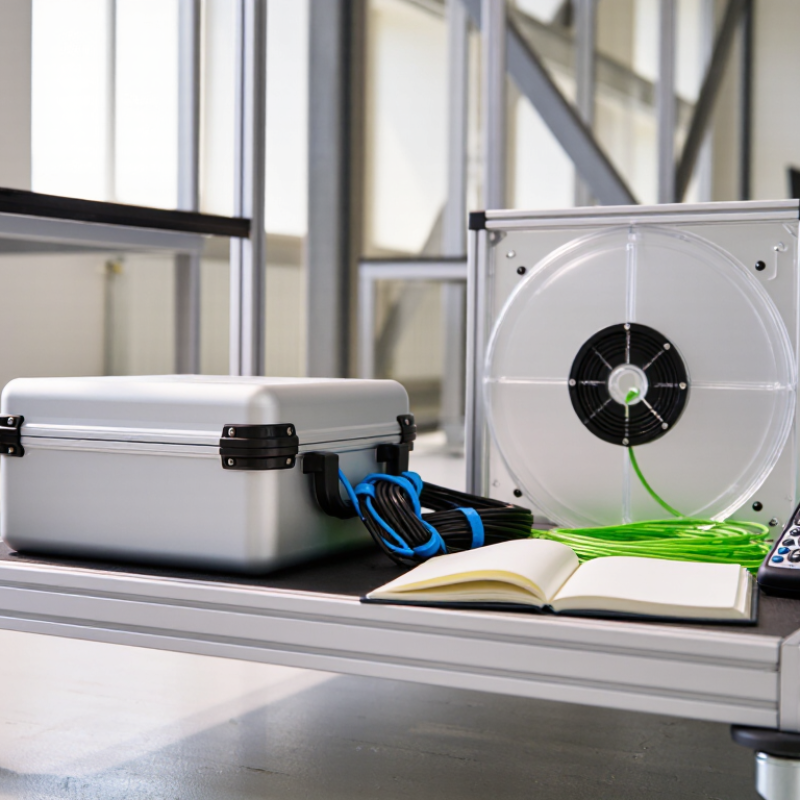
7 Best Ways to Maintain a Stable Magnetic Field on the Move?

Assess the Magnetic Field’s Operating Range Before Travel

Before travel, check the instrument’s specified magnetic-field range—not just its maximum reading. Confirm the lower and upper limits, linear range, temperature conditions, and overload behavior. A sensor may display a value outside its reliable measurement range without making that value accurate. NOAA’s National Centers for Environmental Information reports that Earth’s field varies roughly from 22 to 67 microteslas worldwide in its World Magnetic Model. Use that as a baseline, then account for local steel structures, vehicle motors, and powered equipment. Small shifts matter. I still find nearby metal easy to underestimate.

Compare the expected field at your destination with the device’s operating limits, including any nearby field sources during transit. Check the manufacturer’s technical sheet for permitted temperature and vibration ranges, too; motion and temperature changes can affect readings even when the magnetic field itself is steady. Before departure, record a baseline reading in a repeatable setup, away from metal objects and cables. Repeat it after arrival, in the same orientation and at the same distance from nearby equipment. If the reading changes unexpectedly, move the sensor and check again before adjusting the system. NOAA’s World Magnetic Model is a useful geographic reference, not a substitute for measuring conditions at your actual work location.

Assess the Magnetic Field’s Operating Range Before Travel

Earth’s magnetic field at the surface is roughly 25–65 µT and generally strengthens toward the poles. These latitude-band ranges are approximate; local conditions and date affect the field. Check the destination’s expected field strength against your device’s operating range before traveling.

Choose Suitable Magnets, Shielding, and Mounting Hardware

A stable field starts with a magnet suited to its working temperature, load, and required field strength. Check the magnet’s temperature rating and measure its field at the actual operating distance; small changes in spacing can matter. NOAA/NCEI’s World Magnetic Model 2025 places Earth’s field at roughly 25–65 microteslas, depending on location. Nearby steel structures and electrical equipment can add further variation. Treat that range as background, not a design target.

For shielding, use a high-permeability material to guide stray flux around sensitive components, and leave enough cross-section to reduce saturation risk. Verify the assembled field with a calibrated gaussmeter, including near corners and cable entries. For mounting, choose a rigid bracket, locking fasteners, and a broad contact surface. ISO 16750-3 describes mechanical-load testing for vehicle equipment; its vibration and shock methods can inform a mobile-device test plan. A tidy CAD fit may still loosen after repeated jolts, so inspect fasteners and remeasure after testing.

Tips: Keep a fixed probe position. Mark it on the fixture. Test with the motor running, too. That detail is easy to miss.

7 Best Ways to Maintain a Stable Magnetic Field on the Move: Choose Suitable Magnets, Shielding, and Mounting Hardware
No. Method Practical approach What to check Key trade-off or limitation
1 Choose a magnet suited to the operating conditions Use a permanent magnet grade and material appropriate for the required field, temperature, and environment. Neodymium magnets can provide a strong field in a compact size; samarium-cobalt magnets are often selected when better temperature stability or corrosion resistance is needed. Check the magnet’s operating-temperature limits, demagnetization characteristics, coating requirements, and the field at the intended working distance. Material choice alone does not guarantee a stable field. Temperature, geometry, nearby steel, and mechanical movement also affect performance.
2 Keep magnet temperature within its rated range Protect the assembly from direct heat and large temperature swings. If the application is temperature-sensitive, use a temperature sensor near the magnet and allow the assembly to stabilize before critical measurements. Record field readings alongside temperature during a representative operating cycle. Magnetic flux generally changes with temperature, and excessive heat can cause irreversible loss of magnetization depending on the magnet material and grade.
3 Use shielding to control stray fields Where appropriate, use a high-permeability ferromagnetic enclosure or shield to redirect magnetic flux away from sensitive components. Keep the shield’s geometry and openings consistent with the application. Measure the field both inside the working region and outside the shield, with the complete assembly installed. Magnetic shielding redirects rather than eliminates flux. Shield effectiveness depends on material, thickness, shape, gaps, and field strength; high fields can saturate the shield.
4 Mount the magnet with rigid, nonmagnetic hardware Use a secure bracket, clamp, or enclosure made from a suitable nonmagnetic material, such as an appropriate grade of aluminum or polymer. Prevent rotation, sliding, and impact while keeping metal fasteners away from the field where practical. Check that the magnet cannot shift under expected vibration, acceleration, or handling, and confirm that nearby hardware does not distort the measured field. Even small changes in position or orientation can change the field at the target. Material properties vary, so verify hardware in the finished assembly.
5 Control spacing and alignment Use locating pins, shoulders, keyed features, or a fixed spacer to reproduce the magnet-to-sensor and magnet-to-target geometry after transport or maintenance. Mark the reference orientation and measure from repeatable mechanical datums rather than visual estimates. Magnetic-field strength can change rapidly with distance near a magnet, so loose tolerances may produce noticeable reading changes.
6 Isolate the assembly from shock and vibration Secure the magnet and sensor to the same rigid base when possible. Use suitable vibration isolation for the assembly, while avoiding soft mounts that allow the magnet and sensor to move relative to one another. Inspect for loosened fasteners, wear, cracks, and movement after transport; compare field readings before and after a representative vibration or handling cycle. Isolation can reduce transmitted vibration but may introduce motion if the mount is too compliant or poorly damped.
7 Measure and verify the field in the final setup Use a calibrated gaussmeter or an appropriate magnetic-field sensor at fixed, documented measurement points. Keep probe orientation, distance, temperature, and nearby equipment consistent between checks. Create a baseline field map and repeat the same measurements after movement, assembly changes, or maintenance. A sensor’s range, resolution, calibration, and orientation affect the result. A single reading may not reveal changes across the entire working region.

Reduce Vibration, Temperature Changes, and Magnetic Interference

A moving magnetic assembly needs a firm mount before it needs a stronger magnet. Use a short, rigid bracket and elastomer pads sized to reduce shocks without letting the unit wobble. Check fasteners after the first trip; small shifts can change sensor alignment. Keep cables away from the magnet face, too. Vibration is rarely the only problem.

Temperature deserves equal attention. Typical sintered neodymium-iron-boron material data gives a reversible remanence change near minus 0.1 percent per degree Celsius, though the exact value depends on grade. A 30°C swing can therefore matter in precision work. Let the assembly warm or cool gradually, and log temperature beside field readings. That simple record can expose drift. Sometimes the cause is less obvious.

Nearby motors, steel frames, speakers, and power wiring can distort the local field. IEC 61000-4-8 lists power-frequency magnetic-field test levels of 1, 3, 10, and 30 A/m; these are test conditions, not universal safe limits. Map the field with a gaussmeter at the working position, then repeat with nearby equipment switched on. Keep a baseline. Moving cables can change it. A little inconvenient, but useful.

Monitor Field Strength and Correct Drift During Transit

A stable field starts with a repeatable measurement. Before departure, record the field strength at the working point, using a calibrated meter fixed in the same orientation each time. Note the sensor’s distance from the magnet, nearby metal, and the system temperature. Small changes matter. A steel bracket or a cable shifted during loading can alter a reading, even when the magnet itself has not moved.

During transit, log readings at regular intervals and compare them with the baseline. Secure the sensor so vibration does not change its position, and avoid measuring beside motors or power cables when possible. If the field drifts, pause before making a correction: check sensor alignment and temperature, then take several readings to separate a real shift from a brief disturbance. Adjust coil current or reposition the magnetic assembly in small steps, checking the field after each change. Keep a record of each adjustment. This method is not perfect; rough roads and changing surroundings can still complicate the data. But steady measurements make those uncertainties easier to spot and manage.

Inspect, Store, and Recalibrate Equipment After Travel

After travel, inspect the instrument before switching it on. Look for a shifted probe, loose connector, cracked case, or cable bent sharply near its plug. Check the transport log for drops, unusual heat, or long exposure to vibration. Small signs matter. Wipe dust away with a lint-free cloth, then let the equipment reach room temperature before taking readings. Store it in a padded, rigid case, separated from magnetic tools and steel parts. This step is easy to rush. It should not be.

Recheck the instrument in a low-interference location, using the same fixture and reference conditions as before travel. Record the date, temperature, location, and any difference from the previous baseline. NOAA and the British Geological Survey’s World Magnetic Model 2025 is issued for a five-year period, illustrating that even reference models are periodically renewed; it does not replace instrument calibration. If readings drift beyond the instrument’s stated tolerance, arrange recalibration before field use. Keep the old and new results together. A messy travel record can make a real fault look like normal variation, and that is worth admitting.

FAQS

How do I choose a suitable magnet?

Match its temperature rating, load capacity, and required field strength. Measure the field at the actual working distance. A small spacing change can matter.

How can I measure the magnetic field consistently?

Use a calibrated gaussmeter and keep the probe in one marked position. Measure near corners and cable entries, too. Mark the fixture.

What should I consider when choosing magnetic shielding?

Use a high-permeability material to guide stray flux around sensitive parts. Provide enough material thickness to reduce saturation risk. Check the assembled field.

How should I mount a moving magnetic assembly?

Use a short, rigid bracket, locking fasteners, and a broad contact surface. Inspect the fasteners after the first trip. Small shifts matter.

Can vibration affect sensor readings?

Yes. Vibration can loosen hardware or shift sensor alignment. Elastomer pads may reduce shocks, but the assembly should not wobble. Check after jolts.

How do temperature changes affect a magnet’s field?

Some sintered neodymium-iron-boron materials change remanence by about 0.1 percent per degree Celsius. A 30°C swing may affect precision readings. Log temperature, too.

What nearby equipment can distort a local magnetic field?

Motors, steel frames, speakers, and power wiring can change readings. Measure with nearby equipment switched off and on. Keep a baseline.

Why should I test the assembly while equipment is running?

Operating motors and moving cables may alter the field at the working position. Repeat measurements under real conditions. Easy to miss.

Conclusion

Maintaining a stable magnetic field while traveling begins with preparation. Before departure, check the equipment’s operating range and expected travel conditions, including changes in temperature, vibration, and nearby sources of magnetic interference. Choose magnets, shielding, and mounting hardware suited to the application, and secure components so they cannot shift or strike one another in transit. Thoughtful packing and placement can help reduce field variation before it starts.

How to maintain a stable magnetic field in a mobile environment? Monitor field strength at suitable intervals and compare readings with the desired range. If the field drifts, identify possible causes—such as loose mounts, temperature changes, or interference—and make careful adjustments. After travel, inspect the equipment for movement or damage, store it appropriately, and recalibrate it if readings have changed. These steps support reliable performance from departure through setup at the destination.

Charlotte

Charlotte

Charlotte is a seasoned marketing professional with a deep understanding of the company's portfolio and a passion for elevating its presence in the market. With a keen eye for detail and a commitment to excellence, she ensures that our professional blog is regularly updated with insightful articles......