Aert Medical
MRI scans can provoke anxiety, especially for claustrophobic patients. Many experiences discomfort due to the enclosed nature of traditional MRI machines. Recent studies indicate that nearly 30% of patients report anxiety during scans. This is where the 0.5T MRI shows its advantages.
How does 0.5T MRI reduce scan anxiety for claustrophobic patients? Dr. Emily Carter, a radiology expert, states, "A wider bore and open design lead to a more comforting experience." The 0.5T MRI features a larger opening and a more spacious environment. This design alleviates the feelings of being trapped, making it easier for patients to relax.
In addition to physical space, this model reduces noise levels significantly. For many patients, the whirring and clanking sounds add to their stress. More comfortable settings are available, which facilitate a more positive experience for patients. Ultimately, the 0.5T MRI transforms an intimidating procedure into a manageable one, opening doors for better mental health outcomes in radiologic care.
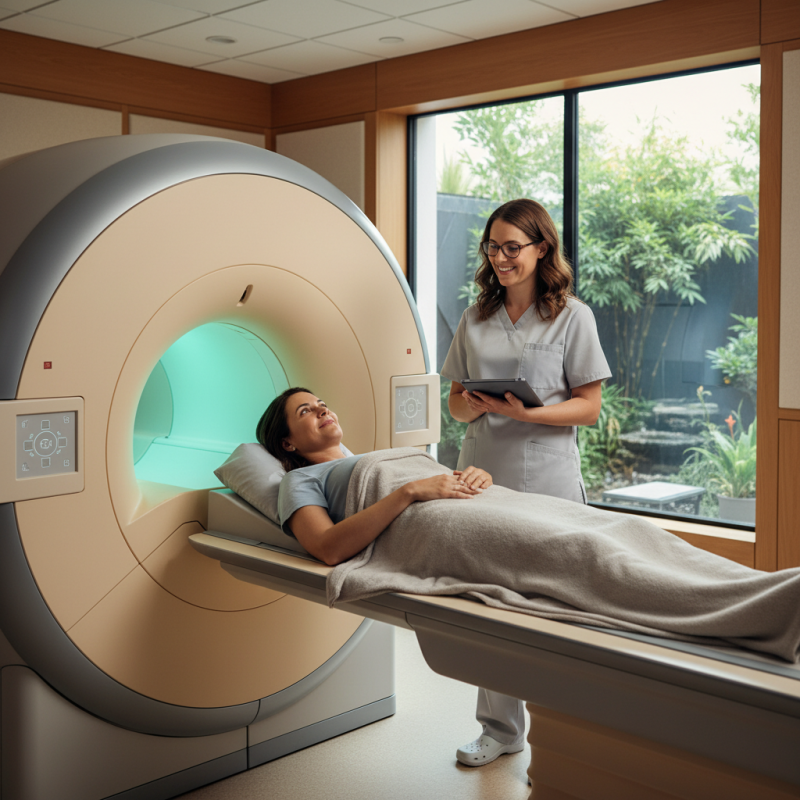
When considering MRI options for claustrophobic patients, the 0.5T MRI stands out. This lower-field machine allows for larger openings, easing anxiety during scans. Studies show that nearly 30% of individuals avoid MRI due to claustrophobia. A 0.5T MRI can significantly reduce this number.
One major benefit is enhanced comfort. Patients can remain relaxed, improving overall image quality. The wider design creates a sense of openness, helping those who might fear confinement. Moreover, the lower noise level associated with 0.5T MRI machines can soothe nerves.
**Tip:** Communicate openly with your radiologist. Understanding the procedure can ease anxiety.
Another advantage is the speed of scanning. 0.5T MRIs often complete exams faster than higher-field options. This efficiency can minimize discomfort for anxious patients. A report reveals that quick scans lead to reduced stress levels.
**Tip:** Practice coping techniques before your appointment. Deep breathing can be particularly helpful.
In conclusion, 0.5T MRI offers distinct advantages for claustrophobic patients. The experience can be made more pleasant, opening up possibilities for necessary imaging without fear.
The choice between a 0.5T MRI and higher field strength MRIs often raises questions, especially among claustrophobic patients. A study from the Radiological Society of North America highlights lower anxiety levels in patients undergoing 0.5T MRIs. Patients report feeling more comfortable, which can lead to better image quality. Higher field strength MRI, such as 1.5T or 3T, may provide greater detail but often at the cost of increased patient anxiety.
In many cases, 0.5T MRI is sufficient for diagnosing common conditions. Research indicates that its sensitivity for certain musculoskeletal disorders is comparable to higher field machines. For claustrophobic patients, this is a significant benefit. The open design often reduces feelings of confinement, which is vital for fostering a calm environment. According to some surveys, over 30% of patients prefer the 0.5T option due to comfort rather than image precision.
Yet, there is a trade-off. While 0.5T MRI can deliver acceptable results, nuances in image quality remain. Some radiologists express concerns that critical details may go unnoticed. Hence, while the 0.5T MRI serves as a comforting choice, its limitations in certain complex cases cannot be overlooked. Finding the right balance between patient comfort and diagnostic accuracy is a persistent challenge in the imaging field.
Claustrophobia can make MRI scans stressful. The design of 0.5T MRI machines aims to alleviate these fears. With a wider opening, patients feel less confined. This open design fosters a sense of freedom. It also helps reduce anxiety.
Enhanced comfort features play a significant role. Soft adjustable cushions provide support for better positioning. Patients can also listen to soothing music during the scan. This distraction helps to ease nervousness. Ambient lighting creates a calming atmosphere. Sometimes, just a little change in environment can help.
Despite these advancements, challenges remain. Some patients may still feel uneasy. The noise of the machine can be overwhelming. There is a lingering fear of the unknown. Each person’s experience varies. Addressing these concerns is vital for improving comfort. More research and feedback are essential for progress in this area. Finding ways to enhance comfort should always be a priority.
Claustrophobic patients often face significant challenges during traditional MRI scans. The confined space of a standard MRI machine can evoke panic, leading to a less effective diagnosis. A 0.5T MRI offers a wider opening, allowing patients to feel more at ease. This comfort can improve the overall scanning experience, potentially leading to more accurate results.
Improved comfort levels contribute to better image quality. When patients are relaxed, they can lie still for longer periods. This stability reduces motion artifacts in the imaging process. In contrast, anxious movements can distort images, complicating diagnosis. It’s crucial to recognize that a patient’s mental state directly impacts their physical outcome. While a 0.5T MRI may seem less powerful than higher Tesla options, it proves invaluable for those with claustrophobia.
Patients still need to confront their fears. Not all individuals will find relief in a wider MRI. Some might still feel anxious. Continuous engagement and communication with medical staff can bridge this gap. Understanding a patient’s emotional needs can lead to enhanced cooperation and ultimately ensure a more accurate diagnosis. Addressing these challenges is essential for achieving optimal imaging results.
For many claustrophobic patients, undergoing an MRI can be a daunting experience. The 0.5T MRI offers a more open design. This layout significantly reduces feelings of confinement. Patients often report that they feel less anxious compared to traditional machines. The wider bore allows for increased airflow and visibility, making a big difference.
Feedback from patients emphasizes the comfort level during scans. Many describe the experience as surprisingly tolerable. Some patients mention they could listen to music or have a support person nearby. This added comfort can ease their nerves. However, not all feedback is positive. A few patients still felt uneasy, even with the benefits of a 0.5T MRI. They wondered if an even larger machine would help.
Many express gratitude for the option of 0.5T MRI. Enhanced comfort leads to better cooperation during scans. This ultimately results in clearer images for doctors. Yet, patients realize that mental preparation is crucial. The psychological aspect of an MRI can’t be overlooked, even with physical improvements.
| Benefit | Description | Patient Feedback |
|---|---|---|
| Reduced Anxiety | Larger bore size helps patients feel less confined. | "I felt much calmer during the scan." |
| Quick Scan Time | Shorter scan duration reduces overall discomfort. | "I appreciated how short the procedure was." |
| Open Design | Open MRI design allows for more light and space. | "The open design made me feel less trapped." |
| Comfortable Positioning | Ability to sit or recline in a less restrictive manner. | "I was able to choose a comfortable position." |
| Better Sound Dampening | Quieter machine operation enhances comfort. | "The noise was much less intrusive than I expected." |
| Support for Family | Family members can stay close during the procedure. | "Having my (family member) nearby helped my nerves." |
| Less Invasive Experience | Less physical contact reduces anxiety. | "I felt like I wasn't being confined." |
| Flexible Scheduling | Availability of multiple appointments boosts convenience. | "I could get an appointment that fit my schedule." |
| Immediate Results | Quick access to results eases concerns. | "Getting the results soon minimized my stress." |
| Positive Overall Experience | General satisfaction leads to better healthcare outcomes. | “I was pleasantly surprised by how easy it was!” |
: The machine has a wide opening, softer cushions, soothing music, and calming lighting.
Patients often feel less confined and report decreased anxiety compared to traditional machines.
Yes, many patients find music distracting and it improves their comfort during the procedure.
Some patients feel uneasy due to the machine's noise and fear of the unknown.
It is crucial. Patients acknowledge that mental readiness impacts their overall comfort and experience.
Many describe the scan as tolerable. However, some still wish for larger machines to feel even more comfortable.
Enhanced comfort allows for better cooperation, leading to clearer images for doctors.
Patient feedback is essential for identifying challenges and refining comfort features for better experiences.
Many patients express gratitude for the option, showing appreciation despite some ongoing concerns.
The article explores the top benefits of 0.5T MRI technology specifically designed for claustrophobic patients. It highlights how this lower field strength MRI offers a more comfortable scanning experience compared to higher field strength machines. One of the key advantages discussed is how does 0.5T MRI reduce scan anxiety for claustrophobic patients through enhanced comfort features such as wider openings and shorter scan times, which contribute to a less confined feeling during the procedure.
Additionally, the article examines patient experiences and feedback, emphasizing significant improvements in anxiety levels and overall satisfaction with the scanning process. The impact on diagnostic accuracy for individuals who struggle with claustrophobia is also considerable, as the ability to remain calm during the scan can lead to clearer imaging results. Overall, 0.5T MRI presents itself as a beneficial option for claustrophobic patients seeking essential medical imaging without overwhelming anxiety.
