Aert Medical
Aert Medical
Aert Medical
The global medical grade AI processor market is undergoing a seismic shift. As healthcare transitions from reactive to proactive, the demand for high-performance, low-latency AI chips has surged. Today, Medical Grade AI Processors are the brains behind advanced diagnostic imaging, robotic surgery, and real-time patient monitoring. Unlike standard consumer-grade chips, these processors must adhere to stringent medical certifications (such as ISO 13485) and offer unparalleled reliability.
In 2024, the commercial focus has pivoted towards Edge AI. Hospitals no longer rely solely on cloud computing due to data privacy concerns and the need for instantaneous feedback during surgeries. This has led to the rise of localized "Edge Nodes" within clinics—small, powerful AI modules capable of processing terabytes of MRI and CT data on-site. The global market is currently dominated by players in North America and Asia-Pacific, with China rapidly closing the gap through massive investments in semiconductor R&D and medical IoT integration.
Market Value 2024
Annual CAGR
Real-time Latency
Global Installations
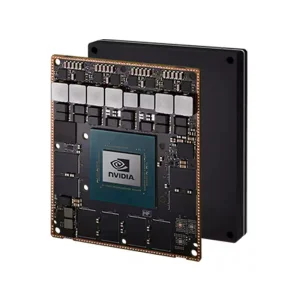
The undisputed leader in AI training and inference. Their Clara platform and Jetson AGX Xavier modules are the industry standard for AI-powered radiology and genomic sequencing.
Dominating the medical server market with Xeon Scalable processors, Intel also provides OpenVINO toolkits for optimizing AI at the edge in CT scanners and X-ray machines.
Qualcomm specializes in low-power AI processors for wearable medical devices and handheld ultrasound equipment, focusing on mobile connectivity and energy efficiency.
A leading specialist in Mobile CT and MRI processors. Their "LingTong" and "Ark" series integrate CBCT and spiral CT technologies, revolutionizing bedside diagnostics.
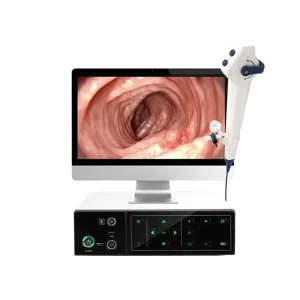
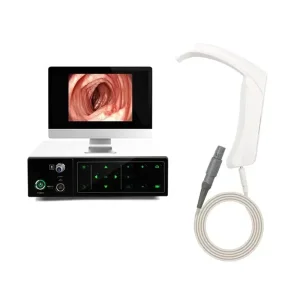
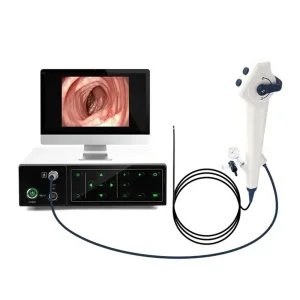
Primarily a device manufacturer, they produce proprietary AI chips used in GI Genius™ systems for real-time colonoscopy analysis.
Providing high-end imaging processors used in 4K/8K medical displays and advanced ultrasound systems with integrated AI noise reduction.
While cloud-focused, Google’s Tensor Processing Units (TPUs) are increasingly used by healthcare research institutions for massive AI model training.
The architecture behind almost all low-power medical sensors. ARM’s Cortex-M series enables AI "at the very edge" for smart implants.
A rising star in China, providing efficient AI NPU (Neural Processing Unit) solutions for diagnostic workstations and medical robotics.
Their FPGAs are critical for low-latency signal processing in high-speed MRI and PET scanners where hardware flexibility is paramount.
The future of medical AI is not in a basement server room but in the palm of a doctor's hand. Procurement demand is shifting toward chips that can run complex neural networks on battery power. This enables Mobile MRI and Ambulance-based CT, allowing for "Stroke-to-Treatment" times to be slashed from hours to minutes.
With global data regulations (like GDPR and HIPAA), processors now feature hardware-level encryption. Procurement teams are looking for "Secure Enclave" technologies within AI processors to ensure patient biometric data never leaves the local device.
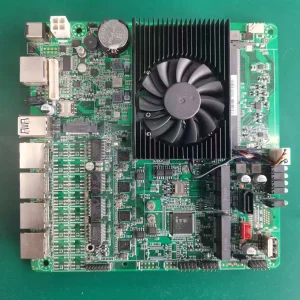
Modern medical processors are now expected to handle "multimodal" data—simultaneously processing visual images, audio heartbeats, and numerical vitals. This holistic AI approach requires processors with high-bandwidth memory and diverse I/O ports (like 2.5G LAN and 5G modules).

Wenzhou Aert Medical Co., Ltd. is a high-tech enterprise focused on the research, development, production, and sales of mobile CT, mobile MRI, and digital X-ray detectors. Headquartered in Wenzhou, Zhejiang Province, the company has multiple research and development centers and collaborates with renowned domestic and international scientific research institutions.
We are dedicated to providing mobile CT and mobile MRI solutions for various application scenarios, breaking through the core technologies of traditional devices. Our equipment is widely applicable in hospital bedside, ambulance, mobile medical vehicles, and battlefield medical care.
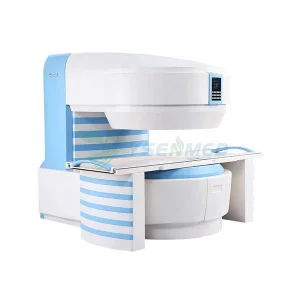
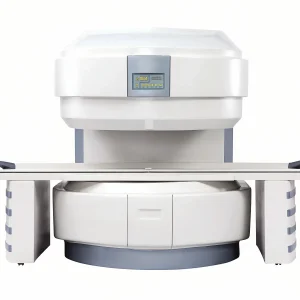
Our mobile CT products are characterized by low radiation, easy mobility, simple operation, and high-definition image quality. They are extensively used in orthopedics, joint care, chest care, stroke, and other clinical specialties. Additionally, Aert Medical is actively developing a low-field mobile MRI, enabling quick diagnosis of the head, spine, and joints.
Our subsidiary, Wenzhou Aert Microelectronics Technology Co., Ltd., specializes in the design and development of CMOS flat-panel detectors and photon counting detectors, positioning us at the forefront of global medical chip R&D.
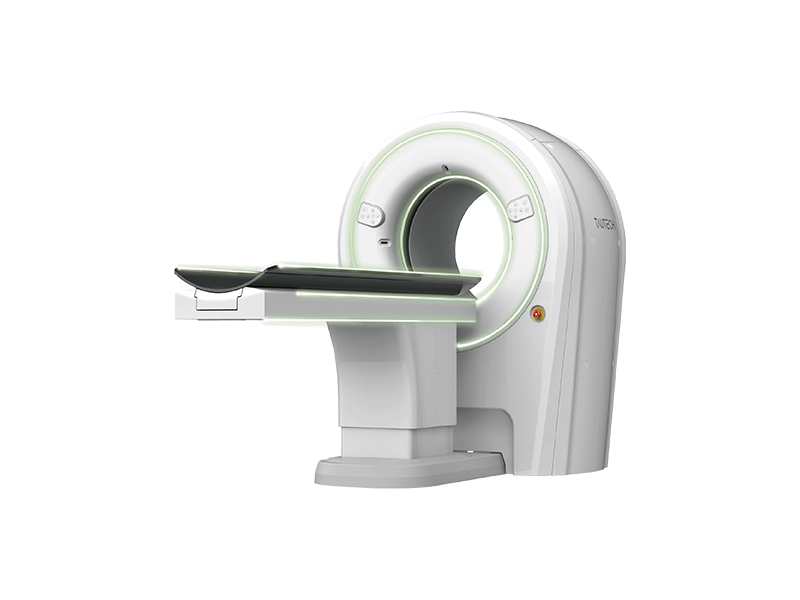
Moving a critically ill patient to the radiology department is risky. Our AI-integrated mobile CT allows for brain and lung scans directly at the bedside, with results interpreted by AI in seconds.
In the "Golden Hour" of stroke treatment, our lightweight AI processors enable diagnostic imaging inside the ambulance, allowing doctors to begin treatment before the patient even reaches the hospital.
Ruggedized, low-power AI modules are essential for military and rural health missions where power and space are limited. Our systems provide 64-slice quality imaging in a portable format.
Small dental or orthopedic clinics benefit from our cost-effective CBCT solutions, providing high-resolution 3D imaging without the need for a dedicated radiation-shielded room.
As we move toward 2030, the integration of Quantum Computing and Neuromorphic Chips will further redefine what medical AI can achieve. Aert Medical remains committed to the philosophy of "Excellence in Medical Devices, Integrity in Protecting Life." We will continue to drive the development of intelligent healthcare, making precise diagnostics accessible to every corner of the globe.