Aert Medical
Aert Medical
Aert Medical
Explore the forefront of diagnostic hardware, motion simulation tools, and critical stepper motors engineered for global medical institutions.
An executive guide to cost control, system versatility, and procurement paradigms in premium diagnostic radiology.
Modern clinical infrastructures are experiencing a fundamental shift. Sourcing departments at tier-1 medical centers, rural emergency systems, and defense medical operations are abandoning bulky, static, high-power-demand equipment installations. Instead, they seek highly mobile, diagnostic-equivalent systems that fit directly into dynamic point-of-care (POC) situations. Key growth areas in the global market are centered on reducing the Total Cost of Ownership (TCO) while maintaining the highest imaging fidelity.
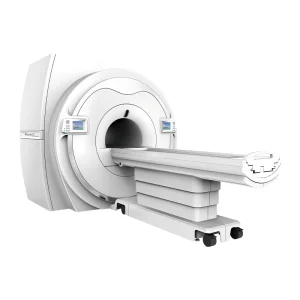
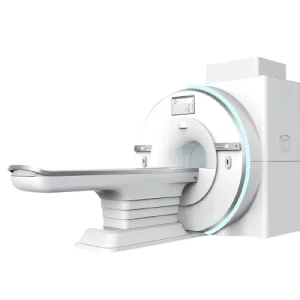
A primary bottleneck in classical magnetic resonance imaging (MRI) has been the dependency on liquid helium. Liquid helium-free MRI systems, utilizing innovative conduction-cooled superconducting magnet technology, eliminate cryogen costs and simplify installation requirements. This makes them highly attractive to developing medical sectors, field operations, and regions with volatile supply chains. In tandem, mobile CT platforms have moved beyond simple diagnostics to integrate with emergency medical vehicles and surgical operating rooms. By removing the need for concrete lead-shielded suites, these systems allow scan-on-demand capabilities at the bedside or on the road.
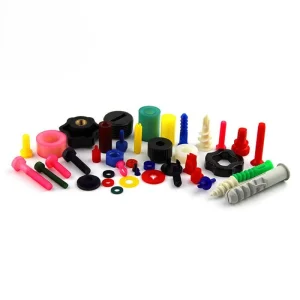
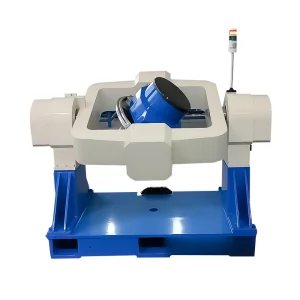
For engineering departments, sourcing involves more than purchasing complete systems. Key downstream components include high-precision stepping motors for automated gantry and collimator adjustments, optical tracking devices for image-guided surgeries, and specialized plastic injection molded housings. These parts must meet cleanroom standards and strict biological compatibility guidelines.
A deep dive into advanced sensor designs, gantry motion control, and the transition to spectral photon-counting devices.
The technical roadmap for medical imaging is defined by advancements in active detection layers and algorithmic reconstruction. Traditional amorphous silicon (a-Si) detectors are increasingly being replaced by Complementary Metal-Oxide-Semiconductor (CMOS) sensors and high-gain photon-counting detectors. Unlike traditional energy-integrating detectors (EID), photon-counting detectors (PCD) resolve the energy levels of individual incoming X-ray photons. This allows for direct conversion, which removes structural blur and delivers multi-energy spectral datasets from a single scan.
Integration of cryocoolers (Gifford-McMahon cycle) directly to the NbTi superconducting windings. Enables strong static magnetic fields (1.5T and above) without requiring liquid helium replenishment, reducing structural weight by up to 40%.
Merging the volumetric scan area of Cone Beam Computed Tomography (CBCT) with the speed and multi-slice coverage of spiral CT. Real-time balance algorithms correct gantry wobbles dynamically, enabling high spatial resolution at low radiation doses.
Moving to direct-conversion semiconductor materials (such as Cadmium Telluride or Cadmium Zinc Telluride) bonded directly to custom CMOS readouts. This architecture eliminates light-conversion steps, yielding exceptional spatial resolution and spectral material separation.
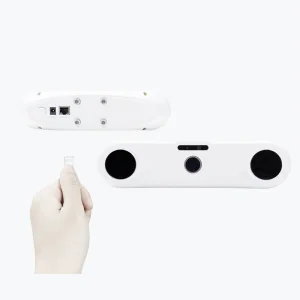
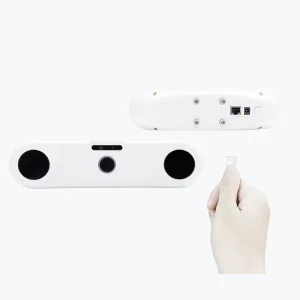
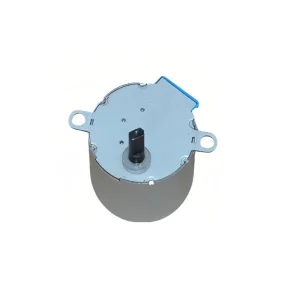
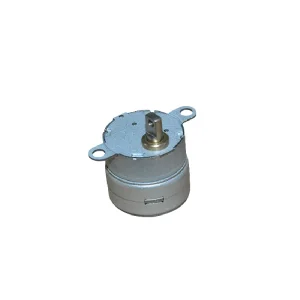
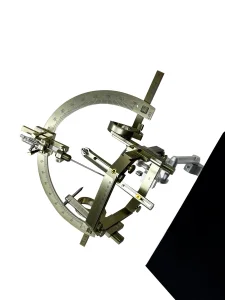
Concurrently, real-time image-guided neurosurgery depends heavily on optical surgical tracking and navigation-assisted stereotactic systems. These tools calculate spatial offsets down to sub-millimeter tolerances. Precise positioning relies on components like 25mm and 35mm permanent magnet gearboxes and stepping motors. These motors handle micro-steps reliably, preventing position drift during long diagnostic procedures.
Analyzing the engineering capabilities, proprietary software balance systems, and microelectronics division of a major Chinese innovator.
Wenzhou Aert Medical Co., Ltd. is a high-tech enterprise focused on the research, development, production, and sales of mobile CT, mobile MRI, and digital X-ray detectors. Headquartered in Wenzhou, Zhejiang Province, the company has multiple research and development centers and collaborates with renowned domestic and international scientific research institutions and universities to drive the advancement of intelligent medical devices globally.

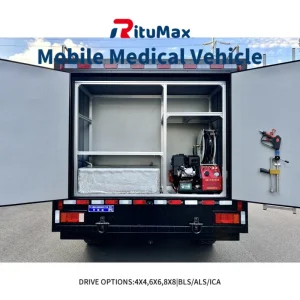
Products and Applications: The company is dedicated to providing mobile CT and mobile MRI solutions for various application scenarios, breaking through the core technologies of traditional devices and continuously upgrading them. Our equipment is widely applicable in hospital bedside, ambulance, mobile medical vehicles, and battlefield medical care, meeting the diagnostic needs in complex environments. Our mobile CT products are characterized by low radiation, easy mobility, simple operation, and high-definition image quality. They are extensively used in orthopedics, joint care, chest care, stroke, and other clinical specialties, greatly improving diagnostic efficiency and patient treatment experience.
Research and Technological Advancements: Aert Medical has independently developed the "LingTong" and "Ark" mobile CT series, each with distinct technical directions. These products, with their low radiation, mobility, high-quality images, and ease of use, meet the diagnostic needs in various clinical settings, including hospitals, health check-up centers, and emergency rescue scenarios. Our self-developed "Automation Balance System" has seamlessly integrated CBCT technology with spiral CT technology, which is expected to elevate CBCT performance to be comparable to 64-slice spiral CT.
In addition, Aert Medical is actively developing a low-field mobile MRI, which is not only compact, with short scanning times, but also offers complete scanning sequences and high image quality, enabling quick diagnosis of the head, spine, joints, and breast. Our upcoming ultra-low-field head mobile MRI will be widely used in neurosurgical operating rooms to provide precise surgical navigation and diagnostic support for stroke patients.
Global Strategy and Collaboration: Aert Medical's subsidiary, Wenzhou Aert Microelectronics Technology Co., Ltd., specializes in the design and development of image sensors, gathering a team of experienced experts in the field. The CMOS flat-panel detectors currently under development will provide strong support as core components for mobile CT devices. Additionally, the photon counting detectors under development are at the forefront of global technology, and their successful development will position Aert Microelectronics among the leading companies in medical chip R&D.
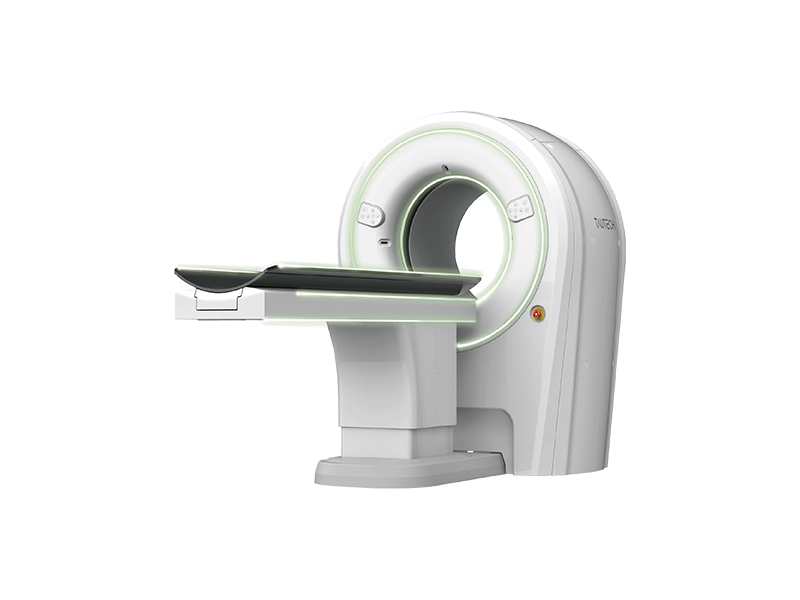
Mission, Vision, and Future Outlook: We adhere to the philosophy of "Excellence in Medical Devices, Integrity in Protecting Life" and actively respond to the "Healthy China" initiative. Aert Medical is committed to improving diagnostic capabilities at the grassroots level of healthcare, enhancing the construction of medical alliances in urban and rural areas, and promoting the sharing of medical resources at all levels. We strive to meet the healthcare needs of people across different regions and continue to contribute to the global advancement of the medical industry. Aert Medical combines technological innovation with humanistic care, continuously focusing on product breakthroughs and market expansion. We aim to become a global leader in mobile medical equipment manufacturing, promoting the widespread adoption of intelligent medical devices, and making significant contributions to the development of global healthcare.
Navigating international regulatory frameworks and auditing Chinese medical manufacturing capabilities.
Sourcing medical imaging equipment from Chinese suppliers requires a clear understanding of international regulatory frameworks. To deploy medical systems across borders, manufacturing plants must follow strict quality standards. This goes beyond typical ISO 9001 certifications. Key requirements include:
When sourcing components such as custom plastic injection molded enclosures or gantry drive motors, procurement agents must verify that the base plastics meet biocompatibility tests (such as ISO 10993). This ensures that any patient-facing materials do not cause adverse systemic reactions. Additionally, optical tracking systems must maintain low latency and prevent EMI/RFI issues to avoid interfering with nearby anesthesia or life-support equipment.
Addressing critical technical and logistical questions on sourcing, certifications, and system installation.
Explore high-accuracy surgical tracking systems, diagnostic analyzers, and custom engineering services for medical assemblies.