Aert Medical
Aert Medical
Aert Medical
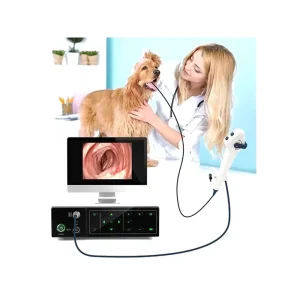
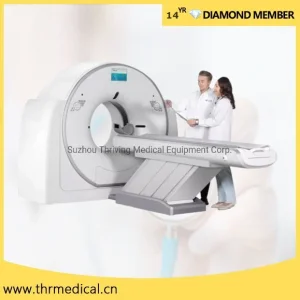
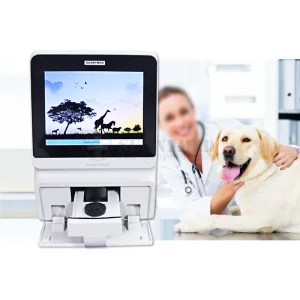
Explore our top-tier selection of clinical digital gastroscopes, point-of-care chemistry analyzers, high-slice mobile CT scanners, and medical components engineered to build resilient decentralized clinical architectures.
Understanding the macro-economic forces, systemic pressures, and workflow challenges shaping modern clinical procurement.
International buyers are shifting focus from heavy, immobile laboratory infrastructures to agile bedside environments. Reducing patient transit to imaging facilities drastically lowers hospital-acquired infection risks and accelerates the Golden Hour intervention period in acute stroke and cardiovascular cases.
Procuring medical devices from China provides massive cost advantages. High-precision tooling, vertical integration of microelectronics, and domestic mineral sourcing (such as medical-grade SmCo magnets) create competitive pricing structures without compromising on E-E-A-T benchmarks or international quality protocols.
Modern buyers demand complete transparency under the EU MDR and US FDA criteria. Vendors must deliver rigorous electromagnetic compatibility tests, comprehensive biological safety reports for patient-contacting elements, and verified low-dose radiation protocols for mobile CT platforms.
Pioneering Global Standards in Intelligent Mobile Imaging
Wenzhou Aert Medical Co., Ltd. is a high-tech enterprise focused on the research, development, production, and sales of mobile CT, mobile MRI, and digital X-ray detectors. Headquartered in Wenzhou, Zhejiang Province, the company has multiple research and development centers and collaborates with renowned domestic and international scientific research institutions and universities to drive the advancement of intelligent medical devices globally.
Through continuous integration of microelectronics, sensor science, and mechanical engineering, Wenzhou Aert Medical has positioned itself as an innovator in addressing the complex clinical demands of bedside analysis, emergency ambulances, and remote rural operations. Our products comply with stringent ISO standards, providing global healthcare systems with high-definition diagnostic imaging at lower operational and radiation costs.

Bridging the gap between lab-based diagnostics and real-time bedside triage. How mobile health hardware adapts to challenging settings.
The company is dedicated to providing mobile CT and mobile MRI solutions for various application scenarios, breaking through the core technologies of traditional devices and continuously upgrading them. Our equipment is widely applicable in hospital bedside, ambulance, mobile medical vehicles, and battlefield medical care, meeting the diagnostic needs in complex environments. Our mobile CT products are characterized by low radiation, easy mobility, simple operation, and high-definition image quality. They are extensively used in orthopedics, joint care, chest care, stroke, and other clinical specialties, greatly improving diagnostic efficiency and patient treatment experience.
In critical care environments, transporting unstable, ventilated patients to imaging facilities presents high risks. Mobile CT and handheld color Doppler units provide immediate chest, abdominal, and cranial visualizations at the point of care, minimizing movement and reducing response time from hours to minutes.
To save neural tissue during a stroke, clinical imaging must happen inside the ambulance. Mobile head CT platforms enable paramedic-side differentiation between ischemic and hemorrhagic strokes, allowing for targeted, pre-hospital administration of thrombolytic therapies.
Operating in rugged terrain or temporary disaster shelter hospitals demands shockproof, lightweight imaging equipment. Digital gastroscopes, portable bone densitometers, and low-field MRIs can operate on backup generator power, offering robust clinical capabilities in harsh environments.
Explaining the transition from traditional Cone Beam CT (CBCT) to Spiral CT equivalence, and the future of photon-counting sensors.
Aert Medical has independently developed the "LingTong" and "Ark" mobile CT series, each with distinct technical directions. These products, with their low radiation, mobility, high-quality images, and ease of use, meet the diagnostic needs in various clinical settings, including hospitals, health check-up centers, and emergency rescue scenarios. Our self-developed "Automation Balance System" has seamlessly integrated CBCT technology with spiral CT technology, which is expected to elevate CBCT performance to be comparable to 64-slice spiral CT.
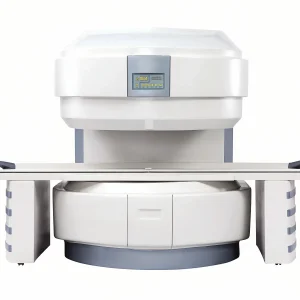
In addition, Aert Medical is actively developing a low-field mobile MRI, which is not only compact, with short scanning times, but also offers complete scanning sequences and high image quality, enabling quick diagnosis of the head, spine, joints, and breast. Our upcoming ultra-low-field head mobile MRI will be widely used in neurosurgical operating rooms to provide precise surgical navigation and diagnostic support for stroke patients.
Aert Medical's subsidiary, Wenzhou Aert Microelectronics Technology Co., Ltd., specializes in the design and development of image sensors, gathering a team of experienced experts in the field. The CMOS flat-panel detectors currently under development will provide strong support as core components for mobile CT devices. Additionally, the photon counting detectors under development are at the forefront of global technology, and their successful development will position Aert Microelectronics among the leading companies in medical chip R&D.
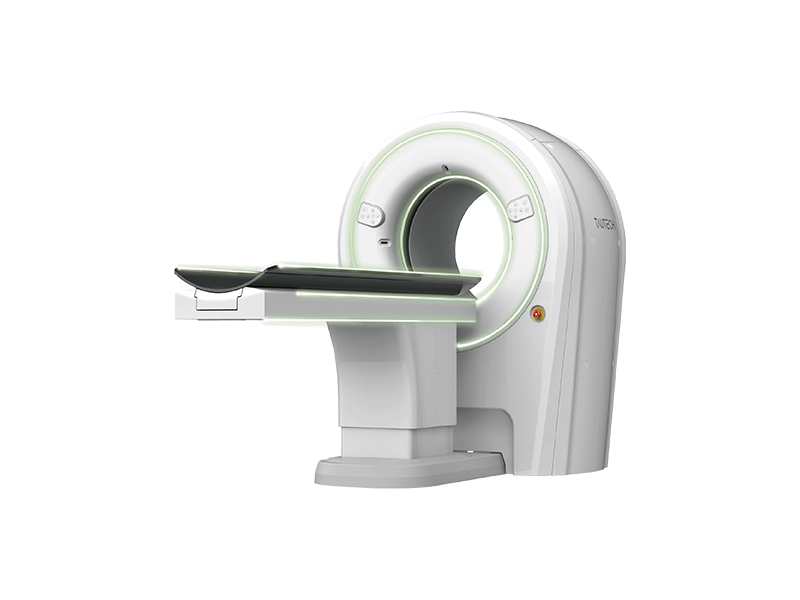
Integrating microelectronics and physical sensors to provide unmatched efficiency and high-fidelity diagnostic images.
Navigating localization protocols, technical support agreements, and ensuring complete device compliance in diverse clinical territories.
Our manufacturing partners maintain robust ISO 13485 quality management systems. Equipment undergoes testing for FDA 510(k), CE (MDR), and national regulatory guidelines, ensuring electromagnetic field levels and scatter radiation shields comply with high-safety standards.
To prevent data isolation, all mobile health devices support DICOM 3.0 interfaces and HL7 protocols. Medical scans are uploaded directly to the hospital's central PACS or cloud database, enabling immediate remote diagnosis by specialists.
Our smart platforms feature IoT modules that monitor system status, tube temperature, detector stability, and power levels. Automated alerts notify engineers of maintenance needs before errors occur, reducing downtime.
We adhere to the philosophy of "Excellence in Medical Devices, Integrity in Protecting Life" and actively respond to the "Healthy China" initiative. Aert Medical is committed to improving diagnostic capabilities at the grassroots level of healthcare, enhancing the construction of medical alliances in urban and rural areas, and promoting the sharing of medical resources at all levels. We strive to meet the healthcare needs of people across different regions and continue to contribute to the global advancement of the medical industry. Aert Medical combines technological innovation with humanistic care, continuously focusing on product breakthroughs and market expansion. We aim to become a global leader in mobile medical equipment manufacturing, promoting the widespread adoption of intelligent medical devices, and making significant contributions to the development of global healthcare.
Direct answers to the critical engineering, quality control, and clinical performance questions asked by hospital procurement departments and global medical device distributors.
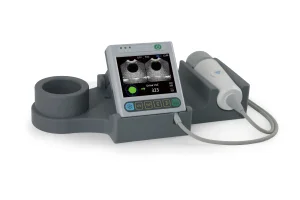
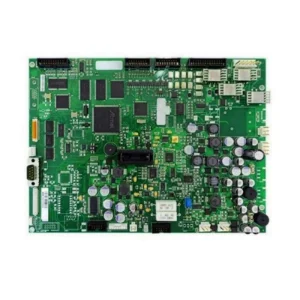
From intelligent medical scanning systems and bladder scanners to custom capacitive controls and magnetic components, find the precise hardware to support your decentralized clinical operations.