Aert Medical
Aert Medical
Aert Medical
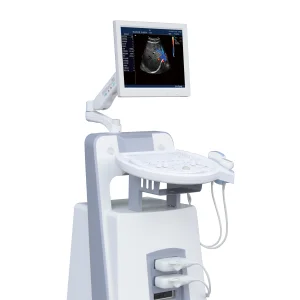
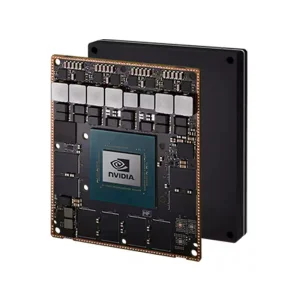
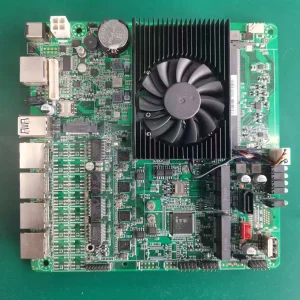
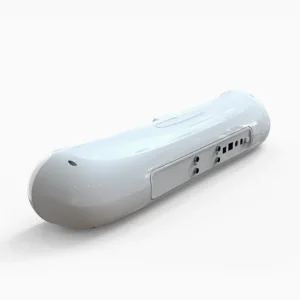
Initial procurement Tier-1 production portfolio including clinical diagnostic systems, high-accuracy structural sensors, and high-performance industrial computing solutions.
Wenzhou Aert Medical Co., Ltd. stands as a premier high-tech enterprise positioned at the absolute vanguard of research, comprehensive development, precision production, and cross-border deployment of mobile Computed Tomography (CT), mobile Magnetic Resonance Imaging (MRI), and state-of-the-art digital X-ray detectors. Headquartered within the technological innovation hub of Wenzhou, Zhejiang Province, the group operates complex multidisciplinary R&D ecosystems in key technical corridors. By sustaining long-term strategic alliances with world-recognized domestic and international scientific research organizations, clinical teaching hospitals, and elite academic institutions, Aert Medical continually engineered advancements that transform the paradigms of mobile and field-deployable diagnostics globally.
"By integrating high-density CMOS sensor technologies with non-ferromagnetic structural physics, we eliminate standard geographical constraints, granting precision imaging accessibility to high-acuity scenarios globally."

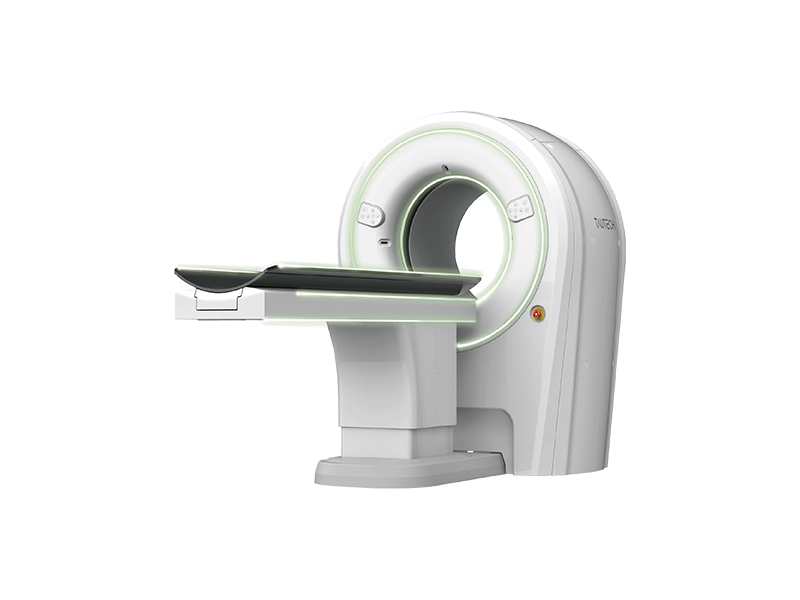
The core vision of Aert Medical is engineered around resolving the historical physics constraints that isolate traditional advanced imaging systems inside shielded hospital basements. Our comprehensive mobile CT and mobile MRI product platforms challenge conventional paradigms by integrating heavy electromagnetic containment directly into micro-scale, transportable clinical platforms. These structural solutions are uniquely optimized for point-of-care emergency rooms, military battlefield medical infrastructure, disaster-response mobile clinics, and neonatal high-acuity critical care units.
Our mobile CT portfolios integrate pioneering ultra-low radiation protocols, multi-slice digital reconstruction engines, ultra-rugged mechanical chassis systems, and highly simplified, single-touch user control interfaces. By operating at reduced dosage levels without compromising sub-millimeter spatial resolution, these platforms provide crucial data streams for acute orthopedic evaluation, joint alignment mapping, emergency thoracic imaging, and immediate bedside stroke assessments, completely bypassing the hazards of transport instability in critically compromised patients.
Enabling full-sequence cranial and peripheral diagnostic scans directly inside ICU cubicles without disrupting secondary life-support hardware channels.
Real-time stroke differentiation (ischemic vs. hemorrhagic) within the golden hour, streaming tomographic data directly to neurosurgical networks via 5G telemetry.
Reinforced mechanical internal stabilization and sealed thermal profiles capable of sustained operation in forward field hospitals and disaster zones.
Designing equipment that operates within the high-gradient environment of a Magnetic Resonance Imaging suite requires absolute elimination of ferromagnetic mass. Under a static field density of 1.5 Tesla or 3.0 Tesla, any ferrous component converts instantly into a high-velocity projectile, threatening patient safety and corrupting the magnetic field homogeneity. Aert Medical’s manufacturing facilities apply advanced material science to bypass these limitations.
Our manufacturing protocols enforce the exclusive use of non-magnetic structural metals such as high-grade titanium alloys (Ti-6Al-4V), specialized austenitic medical stainless steels (Grade 316LN), and structural carbon fiber composites. For electrical traces and signal pathways, conventional inductive components are substituted with advanced ceramic non-inductive capacitors and bespoke optical fiber links that do not interact with Radiofrequency (RF) excitation pulses or switching gradient matrices. Furthermore, structural housings are engineered to mitigate the generation of localized eddy currents, preventing thermal elevation and geometric image distortions during rapid gradient sequences like Echo Planar Imaging (EPI).
Navigating international regulatory frameworks demands strict technical documentation and robust quality control architectures. Aert Medical ensures that all production lines strictly adhere to the rigorous standards of ISO 13485 quality management systems for medical devices. To facilitate streamlined international commercialization, our equipment designs are engineered from inception to satisfy the exhaustive safety metrics established by the FDA, CE MDR, and NMPA regulators.
Comprehensive electrical insulation and patient safety containment. Rigorous testing verification guaranteeing basic safety and essential performance parameters of magnetic resonance equipment for medical diagnosis.
Absolute criteria validation for marking medical devices and other components for safety in the magnetic resonance environment. Categorical certification under strict MRI-Safe and MRI-Conditional operation constraints.
Total suppression of radiated RF emissions below threshold levels defined by CISPR 11, preventing the introduction of visual noise artifacts inside the Faraday cage of the scanner suite.
Detailed technical documentation dossiers verifying comprehensive life-cycle clinical evaluations, proactive post-market surveillance networks, and rigorous risk mitigation profiles.
The localized industrial concentration of Wenzhou and the broader Yangtze River Delta offers unparalleled advantages for international enterprise procurement. The consolidation of precision CNC machining networks, specialized metallurgical refineries, advanced electronic foundry cleanrooms, and automated testing hubs within a single economic zone drastically reduces manufacturing lead times and secondary transportation logistics.
This deep supply chain integration permits Aert Medical to execute scalable custom modifications (OEM/ODM) at fractions of the traditional cost structures typical of Western European or North American producers. International buyers benefit from substantial cost efficiencies derived from optimized raw component sourcing, rapid prototyping cadences, and robust economies of scale, all while maintaining strict material traceabilities and engineering tolerances that exceed international standards.
Aert Medical’s dedicated R&D divisions have successfully commercialized the proprietary "LingTong" and "Ark" mobile CT and MRI processing series. These individual hardware platforms reflect unique breakthroughs in mathematical reconstruction algorithms and structural physical configurations. Our signature breakthrough, the "Automation Balance System", achieves a critical milestone by completely fusing Cone Beam Computed Tomography (CBCT) mechanics with advanced multi-slice spiral CT spatial telemetry. This structural innovation projects standard low-dose CBCT performance indexes up to parity metrics traditionally isolated to stationary 64-slice diagnostic spiral scanners.
Concurrently, our teams are advancing low-field mobile MRI units optimized for ultra-fast diagnostic cycles across cranial, joint, and spinal pathways. By developing hyper-compact permanent magnet assemblies paired with highly responsive micro-channel cooling structures, we compress total acquisition sequences while delivering excellent contrast-to-noise ratios. These forthcoming ultra-low-field mobile solutions are specifically designed to interface directly inside neurosurgical operative suites, giving surgical teams immediate verification arrays for acute stroke navigation, tumor margin validation, and instant intraoperative assessment.
Operating as a specialized semiconductor subsidiary, Wenzhou Aert Microelectronics Technology Co., Ltd. serves as our specialized innovation asset focused on next-generation imaging sensor engineering. The design team has introduced cutting-edge CMOS flat-panel detectors tailored for high-energy mobile diagnostic applications, providing structural component foundations for our mobile imaging vehicles.
Furthermore, our ongoing research into Photon Counting Detectors (PCD) represents the absolute frontier of global diagnostic imaging technology. Traditional energy-integrating detectors rely on intermediate scintillator layers that introduce scatter and degrade resolution. In contrast, our PCD architectures measure individual incident X-ray photons directly, completely removing electronic noise baselines and allowing multi-energy spectral differentiation. This epoch-marking micro-chip capability positions Aert Microelectronics squarely within the elite tier of global medical semiconductor pioneers, driving unmatched tissue definition and diagnostic sensitivity across the international healthcare ecosystem.
Modern B2B healthcare procurement managers face multi-faceted challenges when integrating international hardware into pre-existing hospital ecosystems. Beyond basic material compatibility, equipment must seamlessly bridge data management protocols and local network topography. Aert Medical’s engineering architecture prioritizes these integration factors:
DICOM 3.0 Standard Communication: Every imaging device and edge processing module utilizes standard DICOM communications protocol layers, ensuring instantaneous native transmission to enterprise-wide Picture Archiving and Communication Systems (PACS) and Electronic Health Records (EHR).
Interoperability and Edge Compute Power: Incorporating high-throughput edge nodes allows for automated pre-filtering and real-time processing of complex image data directly at the machine interface, avoiding network bottlenecks over wireless hospital intranets.
Universal Power Architecture: Systems are built with flexible power conditioning subsystems, allowing native operation across multiple global electrical standards (from 100V to 240V, 50Hz/60Hz) without requiring bulky external translation hardware.
Secondary integrated supply-chain catalog featuring surgical optical trackers, high-field MRI systems, and advanced enterprise structural platforms.
Essential operational questions and technical parameters analyzed by leading radiologic safety officers and clinical integration architects.