Aert Medical
High-precision mobile CT scanners, ultra-low-field MRIs, and advanced OEM/ODM diagnostic modules ready for global delivery.

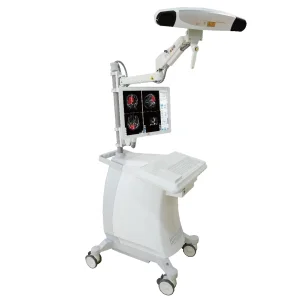
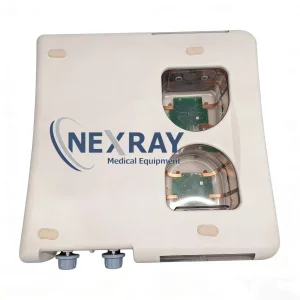
How decentralized diagnostic networks, edge-computed imaging hardware, and integrated Chinese manufacturing supply chains are transforming modern healthcare delivery.
The paradigm of global diagnostic medicine has shifted decisively toward decentralized, digital-first operational frameworks. Tele-radiology—once considered an ancillary service for off-hours emergency coverage—has matured into the backbone of global medical diagnostics. At the center of this revolution is a complex synergy between cloud-based PACS/RIS software networks, artificial intelligence triage algorithms, and highly specialized mobile radiology hardware manufactured by elite industrial OEM/ODM facilities.
As radiologist shortages persist across North America, Europe, and Asia-Pacific, healthcare networks increasingly rely on high-yield manufacturing hubs to produce lightweight, modular, and cloud-connectable medical imaging systems. Sourcing managers and hospital enterprise groups require not only certified software integrations but robust physical hardware platforms capable of delivering micro-millimeter spatial resolution in dynamic bedside, mobile truck, and emergency field environments.
Modern teleradiology hardware integrates directly with edge servers, allowing instant compression and encrypted TLS 1.3 streaming of volumetric DICOM datasets to remote diagnostic centers without data degradation.
Hardware-level neural processing units (NPUs) built into modern mobile CT and MRI scanners perform real-time noise reduction, enabling ultra-low-dose scans that preserve sub-millimeter anatomical detail.
By coupling mobile bedside radiology units with dedicated teleradiology sub-specialist teams, door-to-needle times for critical acute ischemic stroke events drop below 20 minutes globally.
Evaluating leading teleradiology hardware manufacturers, microelectronics suppliers, and software platforms across critical operational vectors.
| Supplier Category | Primary Focus & Core Hardware | Key Integration Protocols | Manufacturing Advantage | Target Applications |
|---|---|---|---|---|
| Mobile CT OEM/ODM Specialists | Bedside Spiral CT, Low-Dose CBCT, Self-Balancing Gantries | DICOM 3.0, 5G Wireless, Cloud PACS | Vertical assembly, direct microelectronics componentry integration | ICU, Emergency Stroke Vehicles, Operating Rooms |
| Low-Field MRI Manufacturers | Point-of-care mobile MRI, specialized neurological coils | Encrypted Cloud Tele-MRI Suite, HL7/FHIR | Shielding-free permanent magnet design, reduced production cost | Bedside neuro-monitoring, rural diagnostic clinics |
| Detector Chip Foundries | CMOS Flat Panel Detectors, Photon Counting Detectors | Raw digital video streaming, PCIe hardware bus | High-yield semiconductor production in specialized economic zones | X-Ray, Mobile CT, Fluoroscopy upgrading |
| Cloud Teleradiology Systems | Enterprise PACS, AI-CAD Triage Platforms, Worklist Engines | RESTful DICOM, Web Access to DICOM Objects (WADO) | Scalable serverless SaaS infrastructure | Multi-hospital networks, remote diagnostic groups |
Next-generation technological breakthroughs redefine how hardware is manufactured, procured, and integrated into modern healthcare cloud infrastructures.
Photon-counting detector (PCD) technology converts individual X-ray photons directly into digital signals, eliminating the energy-conversion loss of traditional scintillators. Suppliers integrating PCD into mobile units achieve unprecedented contrast resolution at drastically lower radiation doses.
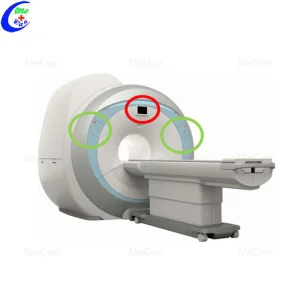
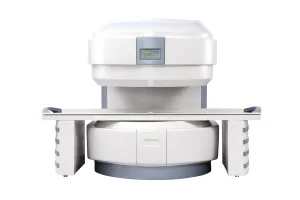
Traditional 1.5T and 3.0T MRI units require expensive radiofrequency (RF) shielded rooms and liquid helium cooling. Modern low-field (0.05T to 0.35T) mobile MRI units utilize permanent magnet structures and AI-enhanced image sharpening, allowing bedside deployment in standard rooms.
By merging Cone-Beam CT (CBCT) space efficiency with high-speed Spiral CT software control, self-balancing gantries elevate lightweight mobile scanners to spatial performance comparable to standard 64-slice stationary machines.
Pioneering Mobile CT, Low-Field Mobile MRI, and High-Precision CMOS/Photon-Counting Microelectronics for Global Healthcare Networks.

Wenzhou Aert Medical Co., Ltd. is a high-tech enterprise focused on the research, development, production, and sales of mobile CT, mobile MRI, and digital X-ray detectors. Headquartered in Wenzhou, Zhejiang Province, the company has multiple research and development centers and collaborates with renowned domestic and international scientific research institutions and universities to drive the advancement of intelligent medical devices globally.
The company is dedicated to providing mobile CT and mobile MRI solutions for various application scenarios, breaking through the core technologies of traditional devices and continuously upgrading them. Our equipment is widely applicable in hospital bedside, ambulance, mobile medical vehicles, and battlefield medical care, meeting the diagnostic needs in complex environments. Our mobile CT products are characterized by low radiation, easy mobility, simple operation, and high-definition image quality. They are extensively used in orthopedics, joint care, chest care, stroke, and other clinical specialties, greatly improving diagnostic efficiency and patient treatment experience.
Aert Medical has independently developed the "LingTong" and "Ark" mobile CT series, each with distinct technical directions. These products, with their low radiation, mobility, high-quality images, and ease of use, meet the diagnostic needs in various clinical settings, including hospitals, health check-up centers, and emergency rescue scenarios. Our self-developed "Automation Balance System" has seamlessly integrated CBCT technology with spiral CT technology, which is expected to elevate CBCT performance to be comparable to 64-slice spiral CT.
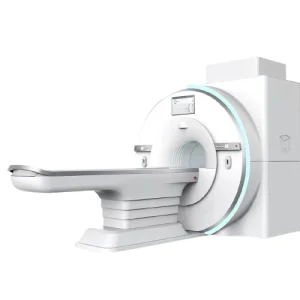
In addition, Aert Medical is actively developing a low-field mobile MRI, which is not only compact, with short scanning times, but also offers complete scanning sequences and high image quality, enabling quick diagnosis of the head, spine, joints, and breast. Our upcoming ultra-low-field head mobile MRI will be widely used in neurosurgical operating rooms to provide precise surgical navigation and diagnostic support for stroke patients.
Aert Medical's subsidiary, Wenzhou Aert Microelectronics Technology Co., Ltd., specializes in the design and development of image sensors, gathering a team of experienced experts in the field. The CMOS flat-panel detectors currently under development will provide strong support as core components for mobile CT devices. Additionally, the photon counting detectors under development are at the forefront of global technology, and their successful development will position Aert Microelectronics among the leading companies in medical chip R&D.
We adhere to the philosophy of "Excellence in Medical Devices, Integrity in Protecting Life" and actively respond to the "Healthy China" initiative. Aert Medical is committed to improving diagnostic capabilities at the grassroots level of healthcare, enhancing the construction of medical alliances in urban and rural areas, and promoting the sharing of medical resources at all levels. We strive to meet the healthcare needs of people across different regions and continue to contribute to the global advancement of the medical industry.
Aert Medical combines technological innovation with humanistic care, continuously focusing on product breakthroughs and market expansion. We aim to become a global leader in mobile medical equipment manufacturing, promoting the widespread adoption of intelligent medical devices, and making significant contributions to the development of global healthcare.
A structured evaluation framework for B2B buyers, distributor networks, and hospital procurement officers evaluating Chinese manufacturing partners.
Verify ISO13485 quality management systems alongside NMPA, CE Mark, and US FDA 510(k) clearances. Ensure radiation leakage parameters strictly follow IEC 60601-2-44 standards for mobile CT units.
Prioritize suppliers with internal microelectronics R&D (such as proprietary CMOS flat-panel detectors or photon counting chips) to guarantee long-term component availability and lower lifecycle repair costs.
Ensure the system provides robust RESTful APIs and DICOM router software kits, enabling effortless auto-routing of encrypted study data to third-party teleradiology reading platforms and EHR networks.
Clear, authoritative insights into teleradiology hardware manufacturing, mobile imaging technology, and international supply chain integration.
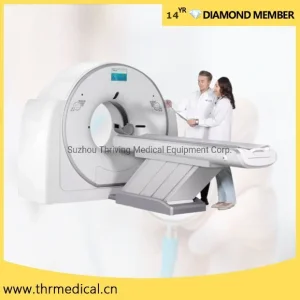
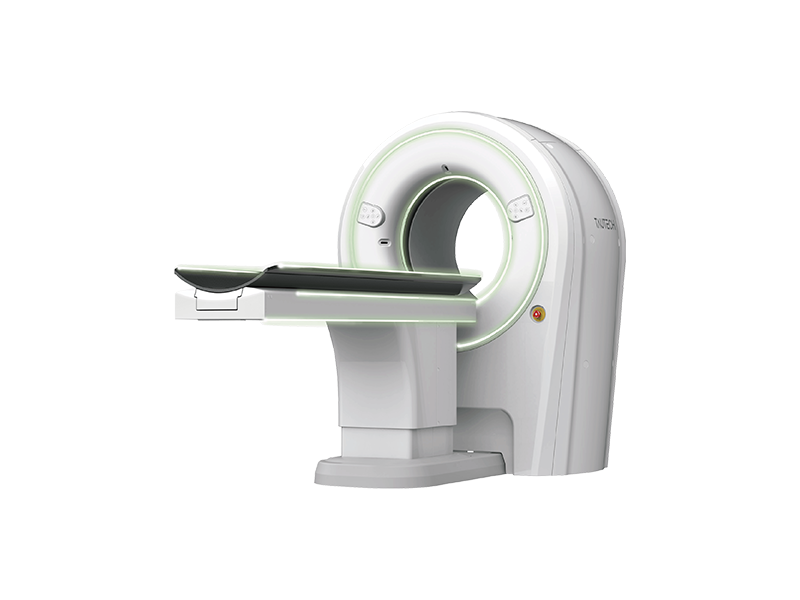
Mobile CT scanners (such as the LingTong and Ark series) feature self-contained lead shielding, compact gantries, and internal motorized drive systems. They can be wheeled directly to patient bedsides in ICUs or installed inside stroke emergency vehicles. Integrated with cloud teleradiology routers, mobile CTs stream low-dose high-definition volumetric scans instantly to off-site radiologists, eliminating risky patient transport.
The Automation Balance System bridges Cone-Beam CT (CBCT) structural efficiency with spiral CT continuous multi-slice acquisition software algorithms. This hybrid calibration mitigates motion artifacts, balances rotation speed, and optimizes photon output, enabling compact mobile devices to match the diagnostic image resolution of traditional 64-slice stationary spiral CTs.
Detectors are the primary cost and performance driver in digital radiology. CMOS detectors offer high frame rates, extremely low electronic noise, and high spatial resolution ideal for mobile units. Photon Counting Detectors (PCD) represent the ultimate tier, counting individual X-ray quanta to deliver multi-energy spectral imaging with zero readout noise, drastically lowering radiation dosage requirements.
Yes. Modern ultra-low-field mobile MRIs operate using permanent magnets or self-shielding electromagnet structures. Enhanced by active noise-cancellation algorithms and deep-learning image reconstruction, these devices eliminate the need for liquid helium refilling and multi-layer copper shielding, operating safely in standard hospital rooms or operating suites.
Leading manufacturers adhere strictly to ISO13485 medical device quality control systems, utilizing automated optical inspection (AOI), high-precision CNC machining for gantry structures, and complete thermal/radiation calibration cycles. Products destined for export carry CE, FDA 510(k), or equivalent regional registrations, backed by international technical support services.
5G networks provide ultra-reliable low-latency communication (URLLC) with high upload bandwidth (exceeding 100 Mbps). This enables mobile diagnostic units in rural areas or moving ambulances to transmit multi-gigabyte 3D CT/MRI DICOM datasets to cloud PACS repositories in real time, allowing sub-specialist radiologists to review and render opinions while the patient is en route.
From custom injection molding and high-field 1.5T MRIs to specialized sensor simulation platforms and 3D metal alloy machining.