 Aert Medical
Aert Medical
Aert Medical
High-precision systems optimized for clinical validation and surgical localization in regional hospitals across Kiribati.
Addressing the technological divide between centralized global clinical workflows and remote geography healthcare logistics.
In the global healthcare landscape, Intraoperative MRI (iMRI) guidance and real-time neurosurgical tracking are critical components in modern oncology, trauma response, and micro-neurosurgery. Globally, hospitals utilize high-field (1.5T or 3.0T) systems to map brain shifts, resect complex tumors, and perform real-time stereotactic biopsies. However, these systems require massive infrastructure—specially designed shielded rooms, continuous liquid helium supplies, complex cooling loops, and high-megawatt power inputs. For isolated developing nations in Micronesia and Polynesia, deploying such equipment has traditionally been an impossible milestone.
In the Kiribati market, the clinical reality is defined by extreme geographic isolation. With 33 atolls spanning 3.5 million square kilometers of the central Pacific Ocean, the population is highly dispersed, centered primarily on the atoll of Tarawa. Standard high-field imaging devices fail immediately here due to three core factors: the high salinity of the maritime air which corrodes sensitive high-voltage circuits, the absence of liquid helium supply lines, and frequent electrical grid fluctuations in South Tarawa and outer islands. Therefore, the introduction of cryogen-free low-field mobile MRI guidance and highly portable, low-dose CT systems represents a massive clinical breakthrough.
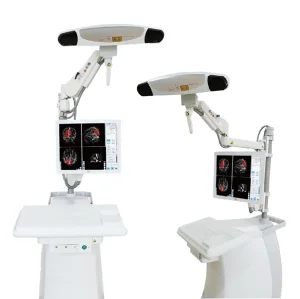
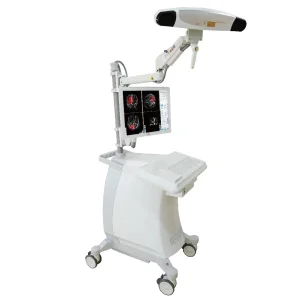
By shifting from rigid clinical infrastructure to point-of-care mobile imaging, medical facilities like the Tungaru Central Hospital (TCH) in Tarawa can finally deliver advanced trauma diagnostic services. Patients suffering from acute head injuries, strokes, or complex joint pathologies no longer need to rely exclusively on costly, time-delayed medical evacuations to Fiji, New Zealand, or Hawaii. Having localized navigation systems and specialized grids directly on the island enables instant surgical planning and life-saving interventions.
Pioneering mobile imaging and precision guidance systems to bridge the global medical resource gap.
Wenzhou Aert Medical Co., Ltd. is a high-tech enterprise focused on the research, development, production, and sales of mobile CT, mobile MRI, and digital X-ray detectors. Headquartered in Wenzhou, Zhejiang Province, the company has multiple research and development centers and collaborates with renowned domestic and international scientific research institutions and universities to drive the advancement of intelligent medical devices globally.
The company is dedicated to providing mobile CT and mobile MRI solutions for various application scenarios, breaking through the core technologies of traditional devices and continuously upgrading them. Our equipment is widely applicable in hospital bedside, ambulance, mobile medical vehicles, and battlefield medical care, meeting the diagnostic needs in complex environments. Our mobile CT products are characterized by low radiation, easy mobility, simple operation, and high-definition image quality. They are extensively used in orthopedics, joint care, chest care, stroke, and other clinical specialties, greatly improving diagnostic efficiency and patient treatment experience.

Aert Medical has independently developed the "LingTong" and "Ark" mobile CT series, each with distinct technical directions. These products, with their low radiation, mobility, high-quality images, and ease of use, meet the diagnostic needs in various clinical settings, including hospitals, health check-up centers, and emergency rescue scenarios. Our self-developed "Automation Balance System" has seamlessly integrated CBCT technology with spiral CT technology, which is expected to elevate CBCT performance to be comparable to 64-slice spiral CT.
In addition, Aert Medical is actively developing a low-field mobile MRI, which is not only compact, with short scanning times, but also offers complete scanning sequences and high image quality, enabling quick diagnosis of the head, spine, joints, and breast. Our upcoming ultra-low-field head mobile MRI will be widely used in neurosurgical operating rooms to provide precise surgical navigation and diagnostic support for stroke patients.
Aert Medical's subsidiary, Wenzhou Aert Microelectronics Technology Co., Ltd., specializes in the design and development of image sensors, gathering a team of experienced experts in the field. The CMOS flat-panel detectors currently under development will provide strong support as core components for mobile CT devices. Additionally, the photon counting detectors under development are at the forefront of global technology, and their successful development will position Aert Microelectronics among the leading companies in medical chip R&D.
How Aert Medical tailors precision guidance and intraoperative systems for the environmental and electrical profiles of Kiribati.
Operating high-tech medical machinery in Kiritimati (Christmas Island) or Tarawa demands specific engineering changes. The local humidity averages over 80% year-round, accompanied by salt-laden winds that trigger fast galvanic corrosion in standard hospital computers and sensor electronics. Aert Medical’s products address these local realities through specialized design modifications:
All internal circuit boards are treated with a triple-layer silicone-modified conformal coating, protecting components from salt spray condensation and preventing short circuits.
Designed to draw minimal power from the local power grids. Integrated backup battery packs allow surgical tracking and CT imaging even during localized generator drops.
Neurosurgical systems operate fully offline for surgical coordinate calculations, using DICOM data store-and-forward systems when satellite bandwidth (e.g., Starlink) is available.
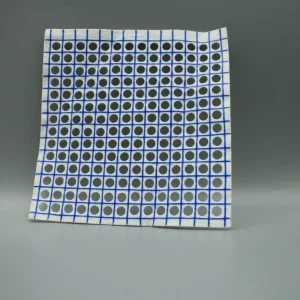
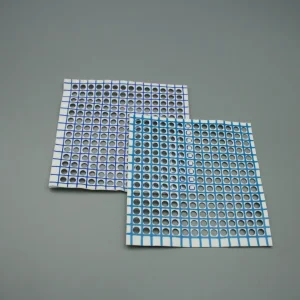
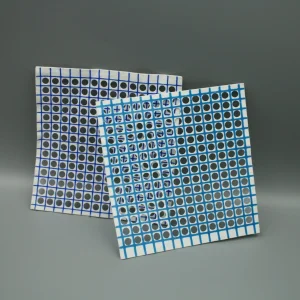
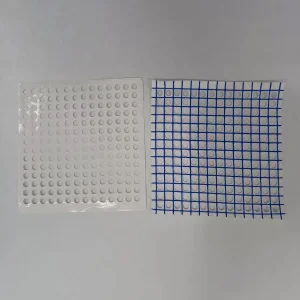
Furthermore, because of the physical distance from major industrial hubs, Aert Medical provides long-shelf-life consumable kits, such as the *Disposable Medical Sterile CT Biopsy Localization Grid*. These grids are individually double-sealed in medical-grade plastic-paper pouches, ensuring sterileness for up to 5 years under tropical conditions. This minimizes reliance on high-frequency shipping cycles across the Pacific.
Standardizing stereotactic biopsy and neuro-navigation procedures without requiring high-field infrastructure.
In interventional radiology and neurosurgery, accessing deep lesions or placing localization needles requires high spatial precision. Under typical clinical setups, this demands continuous real-time fluoroscopic scanning, exposing patients and surgical teams to persistent scattered radiation. Aert Medical’s sterile biopsy grids and navigational devices change this workflow:
This workflow significantly reduces radiation exposure, ensures high accuracy, and is fully executable within the constraints of local surgical suites in the Pacific.
Leading the transition toward AI-reconstructed imaging and cryogen-free mobile systems.
Looking forward to the next decade (2025–2030), Wenzhou Aert Medical is focusing on two main technological goals: AI-assisted low-field image reconstruction and next-generation photon-counting sensors. Low-field MRI has historically faced limits in signal-to-noise ratio (SNR). By utilizing advanced deep learning algorithms trained on paired low/high-field datasets, our systems can reconstruct sharp, diagnostic-grade images from 0.05T to 0.2T scans. This allows neurosurgical systems to map brain shifts in real time without needing high-power magnetic fields.
Additionally, the successful deployment of CMOS flat-panel detectors and photon-counting chips will allow our mobile CT units to perform multi-energy spectral imaging. This is particularly valuable for differentiating between ischemic and hemorrhagic strokes in emergency bedside workflows, which is vital for starting timely thrombolytic therapy in local clinics.
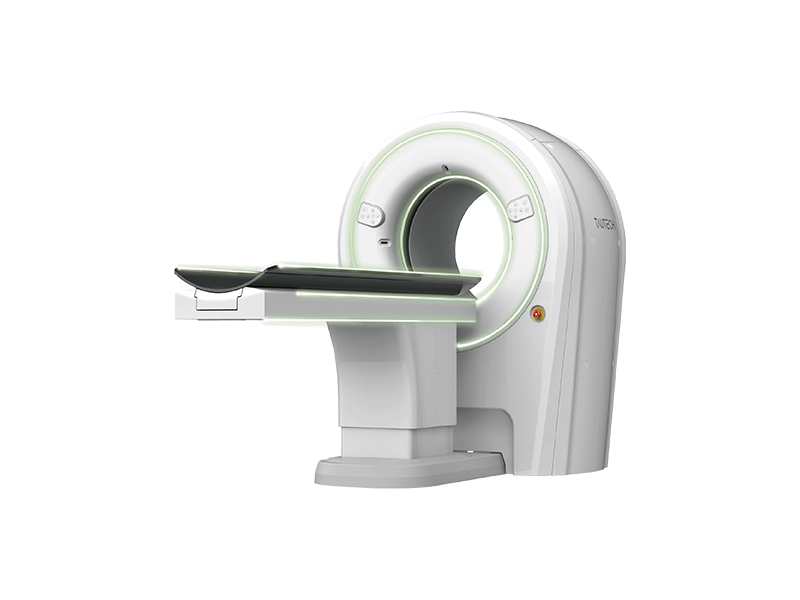
Critical technical details regarding installation, environmental survival, and device maintenance in Kiribati.
Engineered to meet international clinical standards and deliver high spatial accuracy in local surgeries.
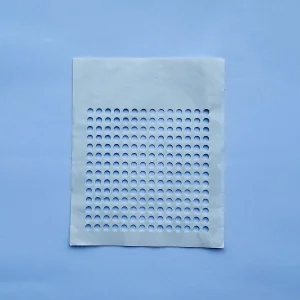
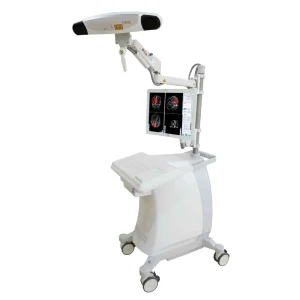
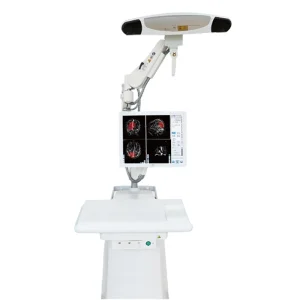
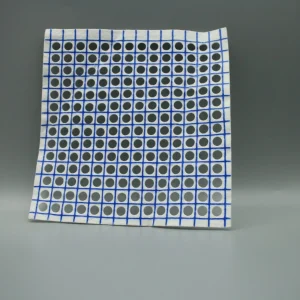
Optimized configurations that ensure surgical precision and reliable positioning during critical surgical interventions.
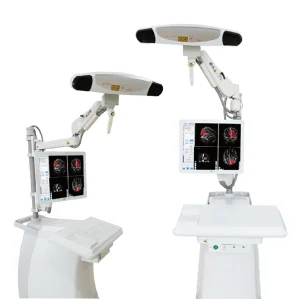
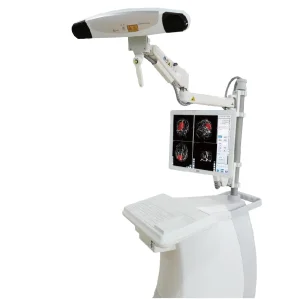
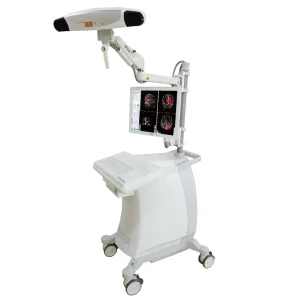
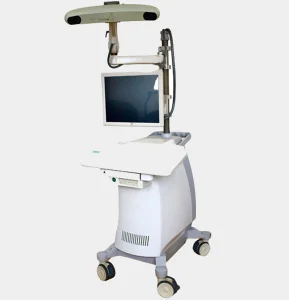
Partner with Wenzhou Aert Medical to configure custom, climate-resilient imaging systems and surgical navigation guides.
Our technical support engineers provide global clinical consults, site planning, and custom anti-corrosive system packaging details.