Aert Medical
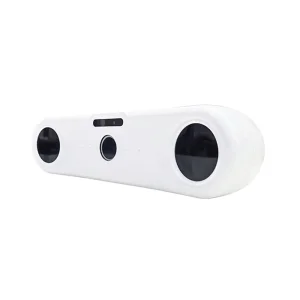
Technological Integration of Permanent Magnets & Real-Time Surgical Navigation
The modern clinical ecosystem demands mobility, speed, and absolute spatial accuracy. In Western Australia—where vast geographical spacing isolates regional health centers from the major hubs in Perth—the implementation of low-field mobile MRI systems and high-precision real-time surgical navigation algorithms is no longer just an optimization; it is a life-saving necessity. Traditional superconducting MRIs require complex liquid-helium cooling infrastructure, high-power energy grids, and massive shielded rooms, rendering them functionally impossible to install in rural clinics or emergency ambulances. Our specialized NdFeB permanent magnet medical imaging systems bypass these limitations entirely, delivering robust diagnostic capabilities directly to the point-of-care.
Real-Time Surgical Navigation Algorithms in Local Clinical Environments
Operating rooms in Perth’s leading private and public hospitals increasingly rely on sub-millimeter surgical accuracy for neurosurgery, dental implants, and complex ENT procedures. At the core of this surgical revolution are real-time optical navigation tracking systems. By combining dual-camera infrared stereoscopic sensors with dynamic point-cloud registration and Iterative Closest Point (ICP) tracking algorithms, these systems map the surgical instrument’s exact 3D coordinates relative to pre-operative CT or MRI volumes. The system matches real-world anatomy to digital space with latency under 15 milliseconds, compensating for patient breathing or micro-movements during micro-neurosurgical steps.
The Physics of NdFeB Permanent Magnets in Compact Magnetic Resonance
By leveraging high-coercivity Neodymium-Iron-Boron (NdFeB) magnetic materials, Aert Medical designs low-field mobile MRI units (0.2T to 0.5T) that achieve exceptional magnetic field homogeneity without the need for active cryogenic cooling. Our engineers apply advanced finite element analysis (FEA) to design magnetic shims that stabilize the field against thermal fluctuations—a critical consideration given the extreme ambient temperatures of the Western Australian outback. This structural durability makes these permanent magnet units highly resilient and ideal for integration into specialized mobile medical trucks and emergency response vehicles operating throughout the Perth metropolitan area and beyond.
Zhejiang-Wenzhou Microelectronics: The Engineering Edge
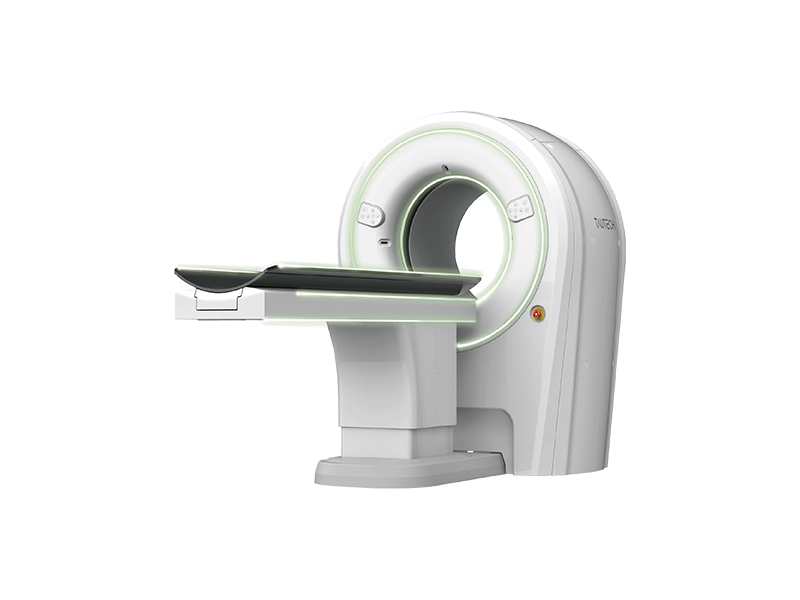
Our research and development is driven by a deep vertical integration strategy. Through Wenzhou Aert Microelectronics Technology Co., Ltd., we develop customized CMOS flat-panel detectors and advanced photon-counting silicon chips. By control-manufacturing the image sensor technology from the silicon wafer level upward, we eliminate the latency and electronic noise associated with generic off-the-shelf medical sensors. This high-efficiency design directly translates to our low-dose, high-definition "LingTong" and "Ark" mobile CT systems, bringing high-resolution 3D reconstructions to orthopedic, joint, chest, and stroke emergencies within minutes.