Aert Medical
Aert Medical
Aert Medical
Modern computer-assisted surgery (CAS) relies on the integration of real-time spatial tracking and complex registration mathematics. In Venezuela, the demand for precision diagnostics and navigated interventions is expanding. Leading clinical institutions in Caracas, Maracaibo, and Valencia are moving beyond traditional manual techniques to embrace guided pathways in neurosurgery, implantology, and spinal procedures. At the core of this transition are real-time surgical navigation algorithms.
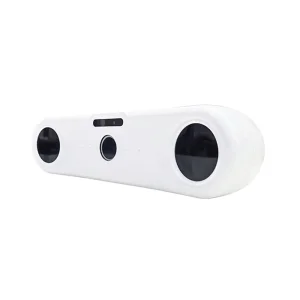
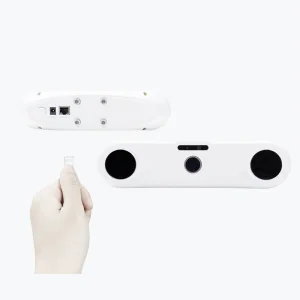
These systems utilize dual-camera infrared sensors to map active or passive retroreflective markers. By registering intraoperative physical space to pre-operative diagnostics (such as CT or MRI datasets), they provide surgeons with real-time feedback on instrument positioning relative to critical anatomical structures, achieving sub-millimeter tracking accuracy.
As a leading supplier, our engineering focuses on minimizing software latency, optimizing point-to-point cloud registration (ICP algorithms), and ensuring robust tracking under changing operating room illumination. This technological edge enables smoother workflows and reduces intraoperative complications across complex procedures.

Venezuelan medical institutions face specific operational demands, including power fluctuations. Our hardware integrates dedicated internal battery backups and software auto-save layers, preserving spatial registration parameters during unexpected shutdowns and preventing the need for recalibration during procedures.
We work alongside regional biomedical engineers to offer quick installations and training, aligning with SACS (Servicio Autónomo de Contraloría Sanitaria) requirements and ensuring compliance with local import and registration policies.
Backed by our integrated Chinese manufacturing center, we deliver end-to-end solutions from optical camera sensors to navigation software. This direct control helps Venezuelan clinics reduce acquisition costs while retaining full hardware customization.
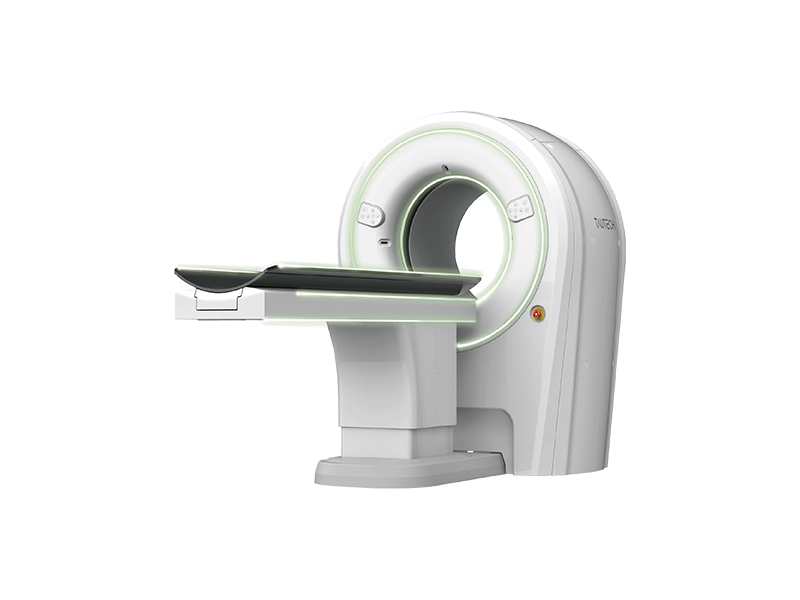
Wenzhou Aert Medical Co., Ltd. is a high-tech enterprise focused on the research, development, production, and sales of mobile CT, mobile MRI, and digital X-ray detectors. Headquartered in Wenzhou, Zhejiang Province, the company has multiple research and development centers and collaborates with renowned domestic and international scientific research institutions and universities to drive the advancement of intelligent medical devices globally.
By integrating diagnostic systems with real-time surgical navigation, we design workflows that bridge patient scanning and navigated surgery. Our mobile CT systems—specifically the "LingTong" and "Ark" mobile CT series—are built for direct deployment in standard operating rooms, emergency units, and mobile clinics.
Our division, Wenzhou Aert Microelectronics Technology Co., Ltd., focuses on image sensor design, creating high-performance CMOS flat-panel detectors and photon-counting detectors that enhance spatial resolution. This hardware base supports high-accuracy clinical registration and reliable navigation performance.
The integration of CBCT and spiral CT technologies within our systems brings high-resolution, low-dose scanning directly to the point of care. In neurosurgery, oncology, and emergency trauma setups, this enables fast intraoperative feedback and simplifies navigation update cycles.
Our upcoming ultra-low-field head mobile MRI is designed to sit alongside neurosurgical operating systems, offering updated anatomical imaging during surgery. This addresses a key challenge in surgical tracking: compensating for intraoperative brain shift and tissue distortion.
Request Our Full Technical CatalogAn overview comparing optical tracking systems with alternative tracking modalities under common surgical scenarios.
| Tracking Parameter | Optical Tracking Systems (Aert Medical) | Electromagnetic (EM) Systems | Mechanical/Robotic Arms |
|---|---|---|---|
| Target Spatial Accuracy | Sub-millimeter (< 0.35 mm spatial deviation) | 0.5 mm to 1.2 mm (susceptible to metal distortion) | High accuracy, but limited by joint tolerance |
| Operating Room Line-of-Sight | Requires clear line-of-sight between cameras & markers | No line-of-sight required; uses fields | Constrained by physical reach and joint angles |
| Instrument Calibration Time | Fast setup (< 60 seconds) with pre-calibrated tools | Moderate; requires field generator setup | Longer initial alignment and kinematics calibration |
| Clinical Applications | Neurosurgery, Craniofacial, Orthopedics, Dental Implants | ENT, Bronchoscopy, Catheter tracking | Orthopedic joint replacements, biopsy positioning |
| Local Adaptability (Venezuela) | High: simple component swaps, resilient software recalibration | Moderate: field distortions from metallic OR tables | Low: requires intensive technical maintenance |
Surgical navigation software must process spatial data rapidly to match the surgeon's movements. Latency of more than 50ms can lead to spatial mismatch, increasing risk during delicate procedures. Our systems reduce latency through parallel marker extraction and predictive Kalman filtering, keeping tracking smooth even during high-frequency instrument movement.
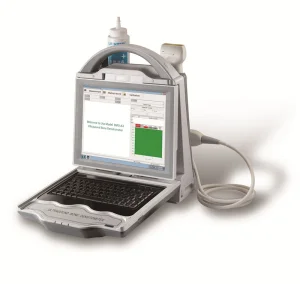
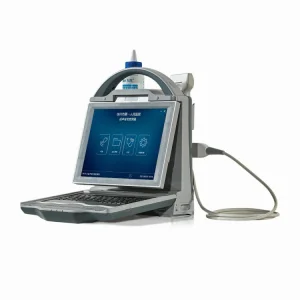
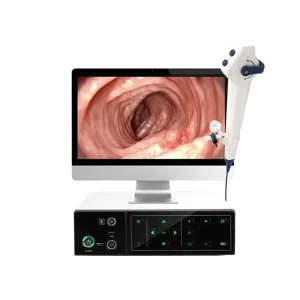
By combining stereoscopic optical sensors, laser rangefinders, and high-definition video streams from devices like the Xbx 4K Endoscope, the software builds a detailed map of the surgical field. This helps maintain tracking consistency during temporary line-of-sight obstructions.
In dental and maxillofacial setups, the software registers patient position markers to the diagnostic model, allowing real-time tracking of drill paths and depth. This protects critical anatomy like the alveolar nerve, helping local clinics perform complex, predictable implant procedures.
Our navigation algorithms feature predictive motion tracking. When line-of-sight to the optical markers is temporarily lost, the software uses kalman filtering and historical trajectory projection to predict instrument position for short windows, signaling the system to alert the surgeon without immediately breaking the registration workflow.
Our systems include internal backup power modules that give the navigation console up to 20 minutes of operational runtime. More importantly, the system's database automatically caches point registration parameters. This allows clinicians to resume tracking immediately once power is restored, without needing to perform a full patient registration.
Yes, our algorithms are built on universal DICOM compliance standards. This enables direct imports from other systems, such as Siemens, GE, Philips, and Toshiba. It also interfaces directly with Wenzhou Aert Medical's "LingTong" and "Ark" mobile CT systems, simplifying intraoperative image acquisition and registration updates.
For dental implantology and maxillofacial surgery, our system delivers a target spatial accuracy of < 0.35 mm. The algorithms match physical anatomy to CT models, helping clinicians control implant depth, angulation, and alignment, protecting the inferior alveolar nerve and surrounding structures.
We provide a complete technical documentation package for registration with the Venezuelan health authority, MPPS (Ministerio del Poder Popular para la Salud) and SACS. This includes CE approvals, ISO 13485 quality certifications, and factory testing documentation, helping local distributors manage customs and registration procedures.
Integrate sub-millimeter optical tracking accuracy and medical-grade diagnostics into your clinical workflows in Venezuela. Contact our engineering team for custom OEM configurations, software demos, and technical specifications.
Send Inquiry Now